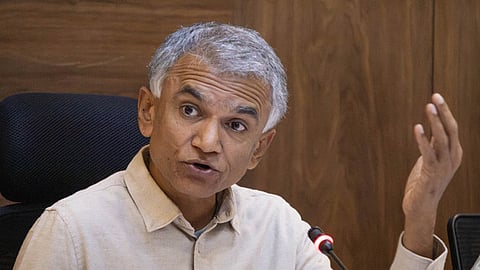

BENGALURU: Emphasising the need to modernise the city’s waste collection infrastructure, Greater Bengaluru Development Minister Krishna Byre Gowda on Wednesday said many garbage collection vehicles in use were more than 15 years old and frequently needed repairs, reducing operational efficiency.
Hence, the government has decided to introduce a new fleet of well-equipped vehicles, in which GPS installation will be mandatory to monitor movement along designated routes and ensure compliance with collection schedules, he said.
“A GPS-based, face-recognition attendance system will also be made mandatory to improve the monitoring and management of sanitation personnel and vehicles, bringing greater transparency and accuracy to daily operations. Regular door-to-door collection will also help discourage residents from dumping waste along roadsides and in public spaces”, he said.
As part of the fleet overhaul, the number of small 500-kg auto-tippers will be gradually reduced, with greater reliance on four-wheeled vehicles capable of carrying three to five tonnes of waste. Three-wheeled vehicles will continue to be used on narrow roads and lanes where larger vehicles cannot operate. The changes are expected to increase the city’s daily waste collection capacity from the current 5,200 tonnes to 9,000 tonnes, stressed Byre Gowda.
Addressing a press conference at the Greater Bengaluru Authority (GBA) headquarters, the minister said that under the new system, work orders have already been issued for five packages, covering five Assembly constituencies, with operations expected to begin in November.
He added that under the revised tender conditions, contractors will be required to invest approximately Rs 10 crore in setting up and operating each package. The contractors have sought two months to mobilise resources and establish the necessary operational systems, and the request has been accepted.
GBA is rolling out a new waste management system across Bengaluru, with 27 Assembly constituencies divided into 33 tender packages to ensure more transparent, efficient and scientific waste collection and disposal. Of the 33 packages, five have already been approved, with operations scheduled to commence in November.
