
BENGALURU: A first-of-its kind Circular Textile Lab aims to prevent ‘virgin textile waste’ from reaching the landfills. The lab will convert textile discards into useful and creative products through a circular, skills-based approach, train women from underprivileged communities and provide opportunities to develop sustainable livelihoods by reusing and transforming textile waste.
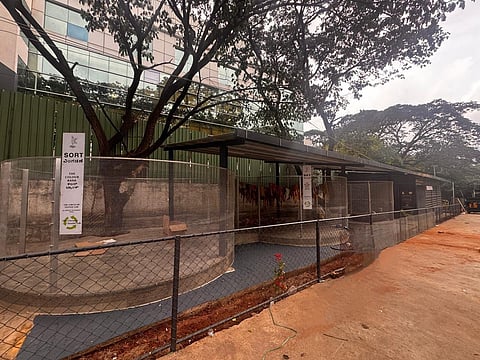
An initiative of Bengaluru South City Corporation, the city’s first Circular Textile Lab and Solid Waste Management (SWM) Learning Centre, will be inaugurated at the ward-level integrated SWM Centre, in Koramangala on Monday, aimed at promoting sustainable waste management and reducing the amount of waste sent to landfills.
The SWM Learning Centre is being established as a practical learning and capacity-building facility for school and college students, citizens, corporate employees, government personnel, NGOs and SWM workers. Located within an operational waste management facility that processes 18 tonnes of different waste streams daily, the centre will combine classroom learning with first-hand exposure to waste processing.
Through interactive programmes, demonstrations, games and facility tours, participants will learn about waste segregation, the seven R’s of sustainability, composting, dry and reject waste management, zero-waste campuses and events, and ways to reduce waste at source.
The Circular Textile Lab, located in the same facility, will address the growing problem of virgin textile waste reaching landfills. It will establish a collection network covering Koramangala and adjoining areas and explore converting textile discards into useful and creative products through a circular, skills-based approach.
The initiative will also train women from underprivileged communities and provide opportunities to develop sustainable livelihoods by reusing and transforming textile waste. The model is intended to be scalable and replicable across other wards.
Together, the two initiatives bring a “learning – action – impact” approach to waste management, creating awareness, demonstrating solutions on the ground, diverting waste from landfills and building skills and livelihoods.
The initiatives aim to contribute towards Bengaluru’s long-term vision of a cleaner, more resource-efficient and sustainable city, while demonstrating models that can be adapted and scaled across the city.
