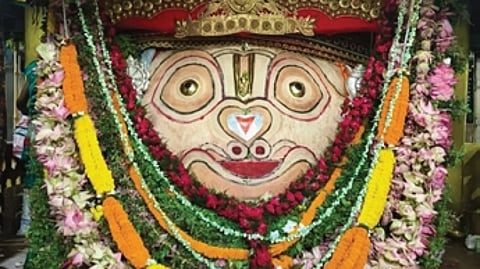

CUTTACK: The otherwise sleepy Padmabana Pitha of Nemalo on Monday buzzed with activity and celebration on the occasion of Jyestha Purnima, also known as Snana Purnima, considered a major event in the religious calendar of Odisha.
Situated on the banks of Chitroptala river, around 45 km from Cuttack, the Pitha witnesses congregation of thousands of devotees on this particular day as it is believed that Lord Jagannath comes on an annual visit to this place to meet them.
It is famous for the tomb of 16th century poet Prophet Mahapurusha Achyutananda Das, one of the famous Panchasakhas of the middle ages. Legend has it that Achyutananda was meditating in a room here when his disciples, despite strict restrictions, opened it before the stipulated time of 21 days, only to find a huge ball of sand and soil instead of Achyutananda. The day happened to be Jyestha Purnima.
If ancient folklores are to be believed, Achyutananda had gone to Puri to witness the Mahasnana Utsav, the bathing ceremony of Lord Jagannath, where he was assaulted for being a Gaudiya Baisnab. Pained, Lord Jagannath had assured him to visit Nemalo during the bathing ceremony on Snana Purnima.
Since then, thousands of devotees congregate at the Pitha right from dawn to observe the Sunya Samadhi Divas of Achyutananda and also get the blessings of Lord Jagannath. A unique fair, known as ‘Balimela’ is also organised on the banks of the river every year in the evening, making it a hub of human activity.
Devotees make sand images of Lord Jagannath and saint Achyutananda on the riverbed and meditate on them throughout the night to seek their blessings. The next morning, they take bath in the river and partake ‘Pedi Bhoga’ and Tulasi prepared by ‘Chari Baithaka’.
Interestingly, both Hindus and Muslims come together to worship the tomb. This has been a tradition since the time Achyuta Khan became one of the principal disciples of Achyutananda. From then on, the successors of Achyuta Khan come to the tomb for their share of Kotha Bhoga on this occasion.
On the day, the district administration made elaborate arrangements for smooth conduct of the festival.
