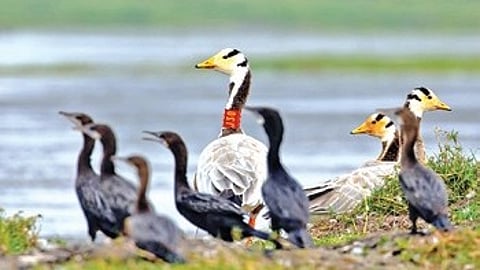

BHUBANESWAR: Three cyclones in the Bay of Bengal within a month, inclement weather and incessant rain have failed to deter migratory birds from flocking to Chilika, Asia’s largest brackish water lagoon, with around 85 species recorded in the wetland by mid-November.
Forest officials, however, are keeping a close watch on the water level at Nalabana, the bird sanctuary within the lagoon, which remains relatively high.
“There’s no visible impact of the tropical storms on migration of birds to the lagoon as yet. It is also too early to say if there would be any,” said Chilika Wildlife Division divisional forest officer (DFO) Amlan Nayak when asked whether the three back-to-back cyclonic storms along the Odisha-Andhra Pradesh coast had affected bird migration.
Nayak said around 85 bird species have already been recorded in the lagoon. These include Eurasian wigeon, northern pintail, northern shoveler, glossy ibis, spot-billed pelican, gadwall, garganey, Pacific golden plover, yellow wagtail, citrine wagtail, grey-headed lapwing, wood sandpiper, common sandpiper, bar-headed goose and greater flamingo.
Forest officials are closely monitoring the seasonally submerged Nalabana sanctuary, which serves as a major feeding and roosting habitat for migratory birds. The water level in the protected area remains higher than usual for this time of the year. However, it is expected to recede rapidly over the next few weeks, creating favourable conditions for the congregation of more birds, Nayak said.
According to Forest officials, receding water levels are crucial for bird congregation as they expose mudflats and create shallow-water habitats. Variations in water depth also influence the availability and accessibility of feeding grounds for different species.
Meanwhile, the Forest department has stepped up anti-poaching measures with 22 bird protection camps operating across the Chilika landscape this season. Up from 21 last year, the camps are manned by frontline forest personnel, watchers and members of local communities. An additional camp has been established at Rambha following a large congregation of birds in the area last year.
Day and night patrolling has been intensified, particularly in vulnerable pockets, including areas around the Parikuda bird protection camp and Rambhartia proposed reserve forest (PRF).
Patrolling teams are also conducting checks at hotels, while the intelligence network has been strengthened by roping in local communities to detect and prevent poaching of birds, the DFO said.
