
THE composer-oriented aspect of Carnatic music has its advantages — it (generally) guarantees minimum discipline from its practitioners. On the flip side, though, it might prompt the artiste to rely largely on merely adhering to the grand structure of the compositions — and sing them sans emotional fervour. Result: the whole art sounds soulless.
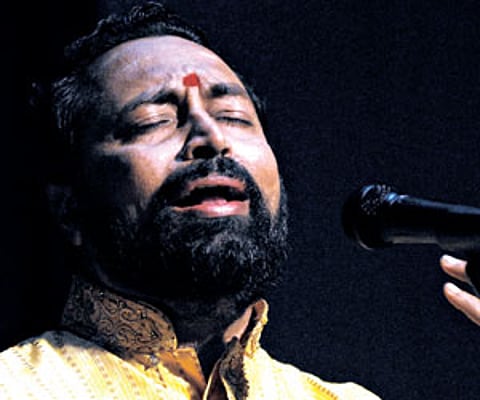
Dr Shertallay Renganatha Sharma is no victim of this trap. At the Narada Gana Sabha on December 14, he sang his heart out with complete selfinvolvement, making the concert sound ripe and resonant.
The opening adatala varnam Vanajakshi in Kalyani (of Veena Kuppier) set the tone of the concert — its beauty and seriousness coming out in ample measure. With his stentorian voice, Dr Sharma went ahead soberly with Dikshitar’s Begada score Vallabha Nayakasya. Later the swaras in Sri Sankara Guruvaram (Nagaswaravali) brought out both the intent of the Maha Vaidyanatha Sivan composition and the singer’s expressive intonations.
What followed was a grand Varali raga alapana. The weighty Amba Kaamakshi (of Syama Sastri) had it string of swaras flowing out gloriously.
Overall, the pronunciation was chaste, the pace unhurried and bhava dense.
The main item of the presentation was tuned to Sankarabaranam. The raga alapanam brimmed with the feel of sowkhya. The Thyagaraja kriti Swara-raga Sudha explored the rich content of the lyrics, while the solfa passages were a purist’s delight. The deep-toned mandrasthayi sancharas painted an enchanting image of the raga.
The fag-end items like Bhajabhaja manasa (Swati Thirunal) in Sindhu Bhairavi and Theduvadu Eppo (of Neelakanda Sivan) in khamas reiterated Dr Sharma’s impressive artistry.
One only feels sad such talents are given unearthly timings when they have to sing to near-empty halls.
Mridangist Jaya Bhaskar and kanjira man Guru Prasad revealed their laya resources, while violinist Neyveli Radhakrishnan left much to be desired.