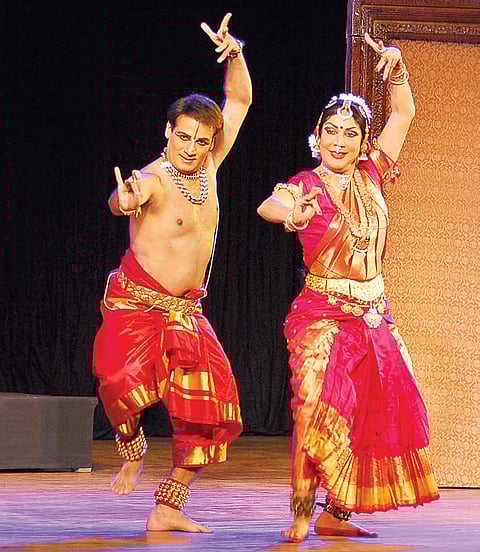

It is said that walls and doors have ears, but can they speak as well? The musical dance drama Dwaaram, a concept conceived by renowned dancer Vani Ganapathy, which was staged at Narada Gana Sabha recently, was about doors narrating stories.
The performance began with a tale told by Rajadwaaram – the palace door. Vani, along with bharathanatyam dancer Sathyanarayana Raju, took the audience to the Mahabharatha era. They presented the story of Draupadi facing disgrace for not having her hair plaited, and about the plight of Yudhistira who loses his everything due to gambling. While Veeradwaaram, the fortress door, narrated the story of Ranadhira Kantheerava of the Wodeyar dynasty, gruhadwaaram, a common house door, narrated the story of relationship between a nayak and nayika. Sathyanarayana’s expressions were powerful, elegant and mesmeric. He made the audience laugh with his comical expressions. Vani kept the audience in rapt attention with her splendid presentation. Most of the songs during the performance were in Telugu, and took the audience on a melodic, delightful ride.
While romance had its part in the story, religiousness crept in when Daivadwaaram, the divine door, narrated the story of Andal, a devotee of lord Vishnu and the only female alvar. The audience witnessed Andal putting on a garland, which was meant for lord Vishnu, and annoying the temple priest. He called it a sin, until the lord himself revealed that Andal was not just his devotee, but wife. This part had the audience applauding.
The suspense was the fifth door, given that the stage housed only four. The fifth was the atmadwaaram, the door of the soul. As part of the narration by this door, Bhaja Govindam was sung, which conveyed that surrendering to the lord was the only way to liberation.