
CHENNAI:Sarath Krishnan* is your average techie. At 34, he has a great corporate job, enjoys yearly vacations with his wife and three-year-old and drives a more-than-average sedan. His life is picture perfect except for the three visits he makes every week to a hospital for an hour. Krishnan needs dialysis, because eight months ago, his kidneys began failing and he needed dialysis to stay alive. Though incredibly unlucky to have diabetes and kidney failure before he hit 35, he counts himself as one of the luckier ones. Why? Because he is among the less than 22 per cent of Indians who need dialysis, who has access to the treatment.
On World Kidney Day, observed today, surgeons and experts in kidney care explain what needs to be done to bridge the gap between people with kidney problem and the treatment they require. “There is still a huge gap between the number of people who need transplants and the organs available today,” explains Dr Muthu V, Head of Urology and Renal Transplantation at SRM Institutes of Medical Sciences (SIMS). “This is why we are always doing more live donor transplantation than cadaveric transplants, even though we have the most evolved transplant set up in the country,” he adds.
After spending time on the common waitlist for a kidney through the Tamil Nadu Organ Sharing Network, most people turn to blood relatives to get a live kidney. “Almost 60 per cent of the people who give kidneys are mothers, after that nearly 20 percent are spouses, provided they’re a match,” he explains. With so many women coming forward to give organs, there has been advocacy for equity. “In so many cases, the woman needs a kidney, but men in the family are not willing to undergo surgery. I have seen this multiple times,” said nephrologist Dr Jayaganesh. “This attitude needs to change,” he says.
With an estimated 10 lakh people requiring dialysis in the country, after hitting end stage kidney failure, only 80,000 people have access to dialysis. “We have done a study across our centres in India and there have been some frightening statistics thrown up. Though globally, the minimum dialysis sessions per week for any person with kidney failure is thrice, in the South, less than one-third actually go as many times,” says Vikram Vuppala, co-founder of Nephroplus, a private dialysis provider. The rest survive on dialysis once a week, which, in a manner of speaking is akin to ‘slow death,’ reducing their longevity and quality of life.
With over 1,500 cadaver kidneys having been transplanted since 2008, the State is far ahead of the country. “But the gap in cadaveric donation in the rest of the country is immense. In most developed countries, the organ donor status is printed on the driver’s license, because most viable organs come from road traffic accident deaths. This is something that needs to be looked at from a policy level,” he adds.
Dialysis
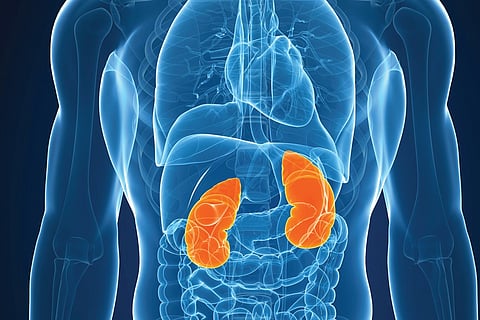
When kidneys fail, the body is unable to filter the blood and produce urine. To offset this need, dialysis is done externally through diffusion and ultrafiltration to remove the excess water and waste from the body. It is not an end stage solution but merely a bridge to organ transplant.
Kidney Waitlist
The common waitlist that is maintained by the Cadaver Transplant Programme has racked up a huge number of takers, with most waiting in list of location and priority based on how sick they are
Total 4,390
Active 2,908
Inactive 1,482
