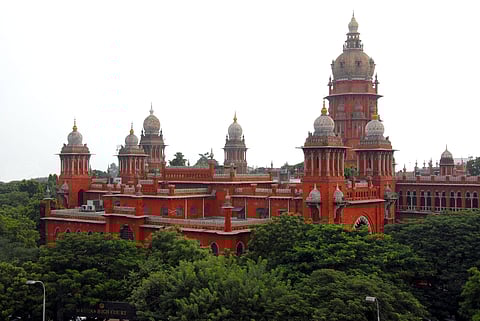

Last Friday, the Madras HC directed a politician, who threatened and prevented corporation officials from sealing an illegal building, to serve in a government hostel.
As per the law books, the crime the politician himself confessed committing warrants a few months in jail. But the courts in the state have in the past occasionally chosen to dish out unusual punishments, are pitched as reformative approach.
Perhaps the most well-known among such orders was the 2003 order of the High Court to B Ranganathan, the then MLA of Purasaiwakkam constituency, to read Gandhi’s books.
When Ranganathan was facing charges of criminal intimidation in a land dispute case and a possibility of arrest, the court granted him an anticipatory bail. But the court directed him to stay in Madurai for five days and read Gandhi literature at Gandhi Museum library.
“Inevitable conditions were to create a proper atmosphere to reform and equip himself to be a fit person for serving the constituency as well as people at large,” this is the reasoning Justice M Karpagavinayagam gave in the order. The same judge in 2002, directed film actress Roja, who was facing a criminal case of cheque bounce, to spend a day in an orphanage. The actress’ day at an orphanage was widely covered.
On another occasion, the Madras High Court, which was hearing a dowry harassment filed by the daughter-in-law of Sethupathy Ramalingam, the then vice-chancellor, Periyar University, ordered the couple to spend time in a hotel and have “unity to the core.”
Sethupathy Ramalingam was sentenced for five years in jail in the dowry case by a district court. But the High Court in trial stage directed the couple to stay together in a hotel, in what the court believed was an attempt to rebuild an amicable relationship between the couple. The High court’s efforts were a failure.
Last year, the Madurai bench of Madras High Court was in the middle of a raging debate when it mooted the idea of making pre-marital potency test mandatory for men and women. The court was hearing a divorce case on grounds of impotency when it passed the order. The court, in an unusual move, also conducted special sittings to elicit opinions of experts on the subject.