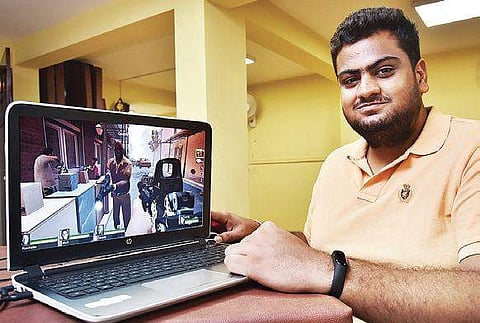

CHENNAI : For Shivay Khanna, his love for gaming began as soon as he was able to hold a controller in his hands. From the age of three, he would play his PlayStation 1, and fondly remembers playing Naughty Dog’s Crash Bandicoot for hours on end.“My dad and I would play Tekken together on the PS1. We were really competitive and would get really angry and aggressive with each other. He would play Eddy, and I would play Hwoarang. Once I managed to get one attack on him, that’s it. It’s not that we would play very well — it was all just button mashing,” said the 21-year-old economics master’s student at Loyola College, Chennai, who credits his father for getting him into gaming.
When he was in eighth standard, Shivay decided to play Counter Strike: Global Offensive and other first-person shooting games more seriously. “In our school, we used to have the game on the lab computers. Our teachers used to let us play if we finished the day’s assignment quickly. I’d finish the project in five minutes and spend the rest of the hour gaming. I eventually scored 90 per cent in computer science, too,” he said, laughing.
His favourite games include those which have large worlds at war with an opposing faction. He therefore likes games such as Battlefield and Call of Duty, while also enjoying adventure games such as the Far Cry and Tomb Raider series. His favourite game, however, is God of War. “I liked the brutality and gore in the game, as well as how difficult it was to beat. The bosses were interesting as well. My dad loved God of War 1, and we used to play that together,” he said.
Gaming for Shivay means happiness. It began as an escape into a fantasy world where miraculous stunts were possible, then evolved into a way to spend time with his father, and is now a stress-buster. “A game, in my opinion, can make you feel more emotions than a movie or a book.
You are usually playing and moving a particular character on screen, and making decisions for them. You feel that which a character goes through, because you are the character,” said Shivay. He said that if people played story-centric games, they would be able to understand the deep emotions that ran through the game, and by extension, the gamer.
