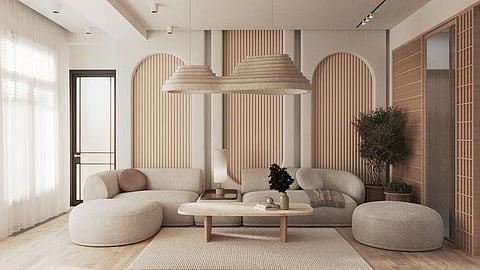

Japandi is nothing but the coming together of Scandinavian and modern Japanese interior design styles. Both have the spotlight on clean lines and shapes. A design style that focuses on minimalistic yet functional spaces through natural elements and muted colours. This design style does not encourage gaudy detailing, high contrast palettes, and dark spaces. Here are the key elements of Japandi.
Materials
The materials used in Japandi are neutral, earthy, and comforting. For furniture, rattan, bamboo, cane, wicker, and wood are used. Textiles used are usually organic linens, brushed cottons, and organic muslins. Japandi also promotes handmade and artisanal work like terracotta, clay, and concrete artefacts, which adds to the majority of décor used here. Hardwood floors are the top favourite to add the required warmth and aesthetic to these spaces.

Fusion
The best way to achieve a Japandi-themed space is not by filling it with Japanese curios or bending completely towards the Scandinavian style. It’s about finding the right balance between the styles through layered texture, finishes, and elements. Keep your spaces refined, simple, and mainly organised to feel the state of complete zen.
Clutter-free zones
This is where the Japanese décor comes in with the bare and simplistic approach to their spaces. Open layouts, integrated storage units that combine practicality, and the functional aspects of Scandinavian design. This style is to keep everything organised and clutter-free, making the spaces minimal yet ultra-aesthetic.
Natural elements
If you like all things natural and organic, Japandi is the style for you. Think bamboo, wood, and tatami mats. From furniture to décor, all things earthy. Japanese homes use tatami mats and bamboo furniture for their warmth and earthy aesthetics, while Scandinavian spaces have wooden accents completing their spaces. Japandi is finding a balance between these materials and making the spaces hygge.
Nothing like too much green
Green plants are very important to add freshness to any space, and Japandi gives them the throne they deserve. Alongside natural elements, the addition of plants adds to the state of comfort and relaxation. A space with plants instantly uplifts one’s mood and helps in well-being in the long run. Having semi-outdoor spaces and lining up corners with greens or having green walls is highly demanded and rightly so.
Furniture
The furniture comprises more than half of any space, making it a deal-maker or breaker in most cases. Low-profile furniture inspired from Japanese homes with oak and mahogany accents from the Scandinavian style come together to make Japandi style furniture. Practical, multi-functional, and non-bulky are the typical features in any Japandi-inspired space.
Comfort
Comfort is the core essence of Japandi. The foundation of Scandinavian spaces locked in hygge, which simply means “a state of complete comfort”. In Japandi, that could be incorporated the easiest through soft furnishings. Think of weighted, textured throw blankets, natural light seeping in through floor-length sheer curtains, soft woven rugs, and fluffy throw pillows. Comfort is definitely a non-negotiable here.
Japandi combines airy, light, and functional aspects of Scandinavian design style with warm, natural elements of the Japanese design style. As a result, Japandi is earthy, organic, and minimalistic. The flawless marriage of hygge (state of complete comfort) from Scandinavian design style and wabi-sabi (the beauty of imperfection) makes Japandi all things good, cosy and natural. Why step outside your comfort zone when you can step into it?