
CHENNAI: After more than four decades of scientific effort, India’s long-gestating Prototype Fast Breeder Reactor (PFBR) in Kalpakkam has finally attained criticality, marking a pivotal step in the country’s nuclear ambitions and its push for long-term energy security.
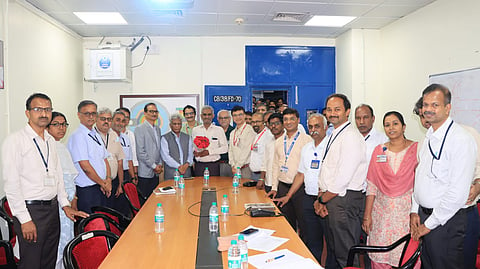
Criticality was achieved at 8.26 pm on April 6, according to Bharatiya Nabhikiya Vidyut Nigam Limited (BHAVINI). The milestone was reached in the presence of Ajit Kumar Mohanty, secretary of the Department of Atomic Energy and chairman of the Atomic Energy Commission; Sreekumar G Pillai, director of the Indira Gandhi Centre for Atomic Research (IGCAR); Allu Ananth, CMD-in-charge of BHAVINI; K V Suresh Kumar, former CMD of BHAVINI and Homi Sethna Chair; and C G Karhadkar, former director of IGCAR. The clearance followed a rigorous safety review by the Atomic Energy Regulatory Board (AERB), with all stipulated conditions met.
The achievement marks the most tangible progress yet in a roadmap conceived by Homi Jehangir Bhabha, the architect of India’s nuclear strategy. The three-stage programme envisages an initial fleet of pressurised heavy water reactors fuelled by natural uranium, followed by fast breeder reactors, and ultimately large-scale deployment of thorium-based systems.
Fast breeder reactors occupy a central role in this strategy, aimed at maximising limited uranium resources while leveraging India’s vast thorium reserves. Unlike conventional reactors, the PFBR uses uranium-plutonium mixed oxide fuel and is designed to generate more fissile material than it consumes.
By converting uranium-238 into plutonium-239, it effectively “breeds” fuel, providing a crucial bridge between the current fleet of pressurised heavy water reactors and a future generation of thorium-based systems. The eventual use of thorium-232, converted into uranium-233, underpins the final stage of the programme, a release stated.
The project also underscores India’s push for technological self-reliance in a strategically sensitive sector. The reactor incorporates advanced safety systems, high-temperature liquid sodium coolant technology and a closed fuel cycle approach that enables recycling of nuclear materials, improving sustainability and reducing waste. It reflects the work of a large cohort of scientists, engineers, technicians and industry partners, with the bulk of design, fabrication and construction carried out using indigenous capabilities.
Beyond energy generation, the fast breeder programme strengthens capabilities in nuclear fuel cycle technologies, advanced materials, reactor physics and large-scale engineering. The knowledge and infrastructure developed are expected to support future reactor designs and next-generation nuclear systems.
As India expands its clean energy portfolio, fast breeder reactors are expected to play a role in delivering reliable, low-carbon baseload power with higher fuel efficiency. The attainment of criticality marks not only a technological milestone but also a step towards a more sustainable and self-reliant energy pathway. For India, which has limited uranium reserves but abundant thorium, the strategic logic is clear. Officials have long argued that breeder technology could enable a substantial expansion of nuclear capacity over time, while reducing dependence on imported fuel.
Yet the path to criticality has been protracted. As early as 2010, the project appeared close to completion when key components were installed at the Kalpakkam site. What followed was a prolonged phase of technical recalibration, regulatory scrutiny and repeated deadline revisions, underscoring the complexity of deploying first-of-a-kind nuclear systems. The reactor’s design reflects that complexity. It relies on a sodium-cooled system, with liquid sodium circulating at high temperatures to transfer heat. The architecture comprises multiple concentric vessels and intricate thermal management systems designed to withstand extreme operating conditions while limiting material degradation.
