
With the advent of IPL and various T20 leagues across the globe, the player pool has grown exponentially. It also meant, the career span of players at the highest level have come down. Only a handful of them can carve out a career of playing for more than a decade across formats for the country. Success — when it comes along — comes bigger than ever. However, the competition is cut throat and not everyone gets to the highest level or even the IPL.
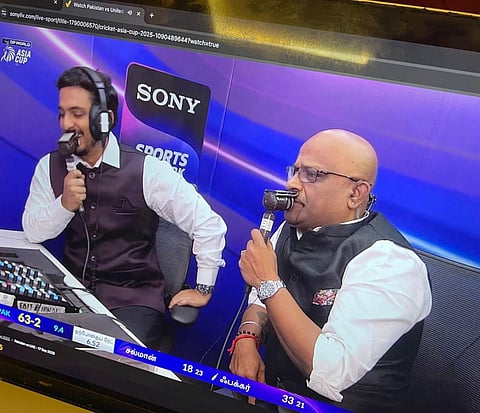
In the past, players used to take up corporate jobs while playing in the state league, but that too is not the same anymore. While several players have taken to content creation and commentary, some have carved out a niche for themselves outside the sport. Former India U-19 and Tamil Nadu Ranji player Vasanth Saravanan is now a TVS Motor two-wheelers distributor with two showrooms in the city. Another former Tamil Nadu player who has found success in the corporate world and whom many Tamil Nadu players can look up to is TR Arasu. The former TN keeper has an MBA degree from the University of Toronto, Canada. Arasu, who held the record for most catches as keeper of TN in 2001, has donned different hats. He has been the head coach of the TNCA Academy, was part of the senior state selection committee for a span of four years and has been chairman of the junior state selection committee for U-17/19/21/23. He is also a regular commentator on the Sony Sports Network. But his current job as president, Retail, Timelinks — which is franchise partner for the Tata group — has given him immense satisfaction and stability in life. Timelinks owns showrooms like Tanishq, Titan World, CaratLane, Mia, Helios, Fastrack, and Titan Eyeplus.
“I had the privilege of joining this esteemed institution Timelinks under the leadership of Sivakumar, chairman, and Chitra Sivakumar, managing director — both ardent patrons of sports with a deep passion for cricket and other disciplines. Sivakumar, the visionary founder and guiding force behind the organisation, inducted me into this journey,” Arasu said. “My experience in cricket has had a profound influence on my leadership approach in retail, particularly in my role with Titan Company Limited. The sport instilled in me a strong sense of discipline, resilience, and strategic thinking — qualities that are equally critical in managing large-scale retail operations. Cricket taught me the importance of teamwork and situational leadership. In retail, especially while overseeing diverse formats and teams, this translates into building cohesive, high-performing teams aligned with organisational goals. The dynamic nature of cricket, where conditions can change rapidly, has helped me develop agility and decision-making under pressure. This is directly applicable in retail, where consumer behaviour, market trends, and operational challenges demand quick, well-informed responses. Overall, cricket has shaped my ability to lead with clarity, adapt with confidence, and drive performance with a balanced, team-centric approach,” he added.
Arasu believes that cricketers can be good professionals in the corporate world. “I strongly believe cricketers can evolve into highly effective professionals beyond the traditional path of coaching. Cricket builds far more than just sporting ability. It cultivates discipline, mental toughness, strategic thinking, and the ability to perform under pressure. These are not just athletic traits, they are core professional competencies. The sport also instills a deep sense of teamwork and accountability. A cricketer understands roles, trusts the team, and works toward a common objective exactly what is required in managing large retail teams and driving business outcomes. Moreover, cricket teaches adaptability. So, rather than limiting themselves to coaching, cricketers can bring immense value across leadership, operations, sales, and strategy roles — because the mindset they develop on the field is highly transferable to the business world,” he explained.
“It can be challenging for sportspersons to secure good professional roles but the difficulty is not because they lack capability. It is usually because their skills aren’t always translated into the language the corporate world understands. Many cricketers possess strong qualities like discipline, teamwork, resilience, and decision-making under pressure. However, employers often look for structured experience, qualifications, and role specific exposure. The gap, therefore, is more about positioning and readiness than potential. To succeed in other professional spheres, cricketers need to consciously prepare for the transition. This includes building relevant qualifications or certifications, developing communication and business skills, and gaining basic exposure to corporate functions such as operations, sales, or management,” he signed off.
