
Life has changed in the past decade for everybody. People spend more time indoors — working, studying, or relaxing. Almost all professions today require people to sit in front of the monitor and spend a lot of time staring at it. In addition, e-learning has become popular, forcing students to spend hours looking at screens. Overall, there is not much contact with nature anymore.
This is causing an increase in the cases of myopia, a condition where eyeballs are too long or too curved so the rays get focussed in front of the retina. As a result, people cannot see distant objects clearly. Myopia develops when people spend many hours indoors working or studying. Although genetic predisposition to this disease exists, myopia may be aggravated by indoor and screen-heavy lifestyles, with the major trigger being lack of outdoor activity and lack of exposure to sunlight. Children who spend long hours watching television or computer screens have a higher chance of suffering from myopia than their peers who spend plenty of time outdoors.
Studies prove that the time spent outside promotes the production of dopamine which helps in slowing down the elongation of eyeballs, thereby reducing the chances of myopia. So, people who spend no time outside cannot protect themselves from the disease.

Prevention, as always, is better. First, it has been proven that just one to two hours a day spent outside can reduce the risk of developing myopia greatly. Even playing or spending time in the shade can help get adequate ambient sunlight exposure without harmful UV exposure.
Second, it is equally important to follow these measures:
1.Regular breaks from work
2. Appropriate reading distance
3. Good illumination in the room
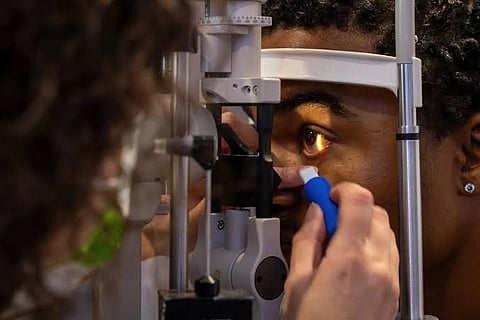
4. Regular eye checks
5. Limiting kid’s screen exposure
Though the present day city life warrants digital time, it is possible to make some lifestyle modification to prevent myopia progression.
Educational institutions and workplaces have to create appropriate conditions to facilitate physical activity and restrict the usage of screen.
(The writer, Dr SharmiBharathi, is a consultant Ophthalmologist, Dr Agarwals Eye Hospital, Chennai)