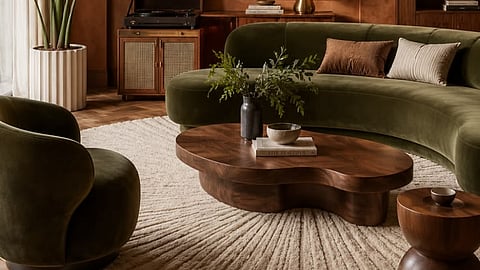

When you return home after a day of work, do you feel like you are getting a comforting hug or do you feel anxious about the clutter, no relaxation hours, and a sense of rough edges? Homes can hold the strongest triggers. Our spaces are reinforcing either safety signals or danger signals all day. Home should hold the feeling of your body relaxing and the tension slipping away.
Predictability
Patterns are the simplest ways your nervous systems signals ‘I am safe’. From the lamp you put on after making your evening coffee to the curtains you draw to let the first rays of sunlight get in, each disproportionately soothing activity that seems merely habitual are actually regulating rituals around your space which make it familiar to your nervous system. They consist of sensory cues that tell your nervous system ‘We have done this before, we are safe’. Your nervous system relaxes when it knows what comes next!

Reduce sensory load
The nervous system is constantly in a process of neuroception, where it scans the environment for risk and safety. Competing sounds, piles of visual clutter, and bright overhead lights can keep you in a state of alert. Not panic, but not settled either. To reduce sensory load, you don’t have to live in a plain, boring home, it’s about managing the space better. Clutter can be reduced by having an organisational system, harsh glares can be replaced with ambient lighting, and sudden sounds can be less disturbing with soft music playing in the background.
Add nature cues
Our nervous system is wired to respond to nature. For most of human history, safety came from plants, water bodies, and sunlight. Modern homes barely have these while the body continues to look for them. Touches of nature can reduce stress to a large extent and help the nervous system stay steady. This could be done by adding one living element like a plant, through natural finishes like wood and stone or even through scent. Earthy colours help too — greens, beige, and terracotta.
Soften hard edges
Kitchens are often the most overstimulated rooms in homes. Straight lines, sharp edges, materials like metal, glass, and tiles along with echoing noise can all keep your nervous system in an alert mode. Adding softness shifts the tone almost immediately. Keeping one warm object in sight, like a wooden chopping board, a bowl of fruits, or even tea towels over the counter can change the look to a non-clinical one.
Lighting
Light is one of the biggest cues you can send to your body about safety or danger. In most cases, these sources of light are free and inexpensive, like sunlight. Getting in sun first thing in the morning is definitely what moves the needle. For the evening light, choosing ambient lights and remaining in low light at least a couple of hours before bed helps the body wind down and not remain in high-functioning mode. After sunset, avoid bright LEDs or any lights that signal daylight, limit screen time and pull down blackout curtains to cut out external sources of light.
Small changes help regulate our nervous system better over time. It’s not about having the perfect looking home but being intentional about adding calm to your environments. They not only help work for you but also compound with time towards the health of your family.