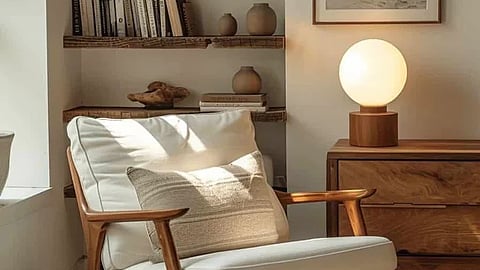

We often obsess about colour, texture, lighting, and even furniture designs while designing our spaces, but rarely about the placement of furniture. It impacts a lot of aspects, like aesthetics of a space, flow of activities, and functionality of the room but most importantly how conversations are had. Some of the most aesthetic spaces with luxury finishes would fail at nurturing deep conversations and this is because the furniture is not placed wisely.
Furniture does more than just fill a room. It determines how close we sit, how long we stay, do we feel nurtured in the space or does it just get us to co-exist. We often think conversations are shaped by the people involved but as designers, we understand the impact that spaces we design have on getting these conversations to unfold.
In modern homes today, mostly where the living rooms have become entertainment rooms as well, all the furniture is placed facing the screen. While this is perfect for movie nights, everyone now is sitting facing the TV instead of each other. Unknowingly this makes the TV the focal point of the room.
Now in the same space if two chairs are placed slightly angled towards each other with a coffee table in between and a lamp with soft lighting, there’s also room for conversation.
The dining table is the emotional centre of any home. It’s rightly said, the family that eats together has a better emotional bond. It is one place in the house where everyone naturally faces each other and meals become more than just food. It’s where milestones are celebrated, memories are made, the day’s details are shared, or a space where everyone checks in with the others.

Interestingly, many heartfelt conversations happen while sitting side by side. Couples connect while cooking together, children open up while doing activities, two friends share a hot beverage in a cosy reading corner. This is also because constantly holding eye contact can feel overwhelming and while sitting beside someone is not facing them yet making it intimate enough to open up.
Good planning of furniture is not always about maximising seating, it is also about making it functional to promote conversations. An eight-seater will accommodate more people but it would make conversations feel distant and unnatural. In the same space, lounge chairs placed well have enough proximity for a conversation without the feeling of someone intruding your space.
There are corners of the home that require distance too. A reading nook by the window with a single-seater, footrest and floor lamp, a swing in the backyard, or a bench in the garden — these are the corners where comforting conversations happen naturally, someone joins in with a cup of coffee, a kid reading alongside you, a neighbour getting back from work stops for a quick chat which can go on for hours.
Where will the family gather for birthdays? Where will the grandparents unwind with the grandchildren? Where will friends have undistracted conversations? These are the questions that need to be answered when designing a space. And while they cannot fit into budgets or other parameters, they are majorly the reason some homes are experienced with warmth over the perfectly curated luxury home.
Good interiors are where conversations linger long after the tea has gone cold and where guests feel welcomed to stay longer.