
Across India today, citizens continue to gather on streets demanding accountability, justice, and a hearing from those in power. Whether the issue is education, citizenship, or public policy, protest remains one of democracy’s oldest languages and every generation has learnt it.
About 50 years ago, the Madurai University Teachers’ Association (MUTA) spoke that same language. Their demands stood for dignity, service protection, direct payment of salaries, UGC scales, pension, leave benefits, maternity protection, and fair treatment within the educational system. Their story, however, has largely been forgotten.
The founder and CEO at Christie Global Consulting, former senior scientist and project director at DRDO, Latha Christie’s latest books, The Cost of Standing Up in English and Siraikkul Perasiriyar in Tamil, remind people of the 1977 protest by teachers’ associations of Madurai Kamaraj University, Manonmaniam Sundaranar University, Mother Teresa Women’s University, and Alagappa University that paved way for these provisions.
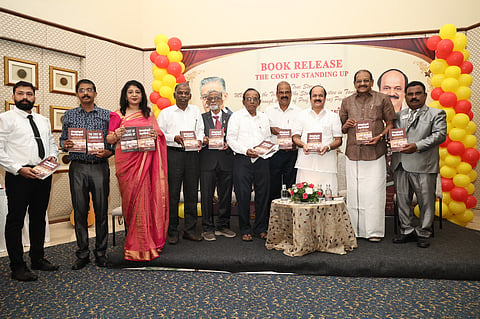
The books, released by JCD Prabhakar, speaker, Tamil Nadu Legislative Assembly, in the city on Saturday, reconstructs the story of meetings, memoranda, conferences, arrests, imprisonment, negotiations, and the long struggle for justice in the teaching profession through professor P Gnanaraj, professor of Chemistry at St. Xavier’s College, Palayamkottai, and MUTA’s general secretary.
The event also marked the 90th birthday of Gnanaraj, Latha’s father. “My father told me that some people have written about MUTA being a militant organisation. He and his people who fought for a cause under the organisation’s name were feeling very bad. So, in order for the people to know the real history, this book had to be written,” clarifies Latha.
The irregularities in salary payments, dismissing professors during the PUC shift, and lack of maternity leave led the professors to wear black badges, observing fasts, holding demonstrations, and pressing their demands. Pregnant teachers were arrested. “My dad was in prison at that time for 15 days. Almost 400 individuals, including journalist Solomon Pappaiah, were sent to Madurai jail,” claims Latha.
Later, the then CM, MG Ramachandran opened negotiations. “All of this is documented. My father gave me some 50 newspaper clippings. I used them to write this book,” she says. MUTA’s efforts resulted in redeployment of surplus teachers, improved salary structures, pension, leave, maternity benefits, and greater recognition of teachers’ dignity.
The 20 chapters in the book zooms into the lives made and lost in the struggle. One among them is Gnanaraj’s. Latha notes, “I wrote about my father’s role in the movement — why he took part in it even though his college or his salary was not affected, but only because he wanted to become part of that movement and stand with fellow professors — in the last two chapters.”
In preserving this forgotten chapter of TN’s educational history, the books remind us not just of the victories that reshaped higher education, but also the sacrifices, resilience, and conviction that made them possible.
