
Aged nine or ten, Gowthaman Jaedan Naganathan would sit in a predominantly white school in Britain and listen to rock — Linkin Park and Evanescence — with his classmates. He eventually listened to dancehall and hip hop. Then came grime — which was hip hop rebuilt with a London accent — followed by drum and bass, and UK garage. With the listening genre changing every once in a while, what remained unchanged was his weekend routine, where he sat with a flute and learned to play Carnatic music.
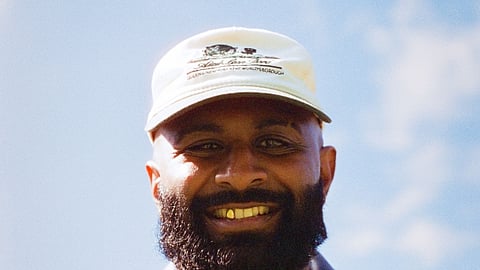
His life arranged itself in parallel soundtracks. By the age of thirteen, he was DJing. He was also wearing a puli pallu chain, gold and shaped like a tooth. His friends looked at it one afternoon and called it a ‘Gold Tooth’. The name stuck the way nicknames do and years later, when he passed his dental examinations and had gold grills made to mark it, the nickname acquired a second meaning and stopped being a nickname altogether. He now goes by the name Goldtooth.
Born in the United Kingdom to Eelam Tamil parents, the 32-year-old has lived in New Zealand for the past two years, where he works full-time as a dentist and spends the remaining hours as a DJ, radio broadcaster, and vinyl curator.

This Tamil New Year, he played a collection of Ilaiyaraaja songs for diaspora celebrations in London that went viral on Instagram. The record, anchoring all of it, is one he found years ago while scrolling through an internet shop — tracks from Sindhu Bhairavi (1985).
Befittingly, we spoke with Goldtooth on May 14, the day Ilaiyaraaja completed 50 years in the Tamil cinema industry and Goldtooth admitted to having spent the last few years collecting the composer’s vinyls. He said, “I guess one thing as an Eelam Tamil is that we have lost a lot of our history in the arts because of the conflict. When I found these records, for me it was like, ‘Wow, art in our culture has existed for so long.’ We get taught as children of immigrants that the only pathways are academic careers. But then, having this record in my hand, it feels like someone has composed the music, done the choreography, the art, the typography; it is this beautiful physical form of evidence that we (Tamilians) are very artistic people.” That physical evidence sits on his shelf in New Zealand.
“You get a lot of fusion Tamil music with Afrobeat or dance music now, but Ilaiyaraaja was the blueprint for that. Sindhu Bhairavi album is a perfect example. He was one of the first people to use Carnatic instrumentation and melodies in a film score. He was the first person to use electronic, digital music,” Goldtooth shared, pointing to the music album of Agni Natchathiram (1988), where Ilaiyaraaja understood that young audiences craved disco and funk and gave them exactly that.
The way Raaja reads his audiences, Goldtooth admitted to reading his while DJ-ing. He packs a record bag by selecting an opening track that sets a scene and a closing track that completes it, and then he reads the room for everything in between. He explained, “Do they like more disco stuff? Do they want more bass? Do they struggle to dance to a certain rhythm? I have an opening, a buildup, a climax, a calm down stage, and then an outro. If I need to bring the vibe down because everyone has been really hyped for a long time, I will suddenly play a tune that calms them down. Then I go from calm down to building it back up, and we get to the climax.”
This DJ rarely takes requests. He does not carry a laptop full of music. If the record is in his bag, he considers playing it. The same attention follows him into his dental clinic. While performing surgery, he keeps a curated playlist running for his patients.
When he surveys the wider Tamil diaspora making music now, he names several artistes with genuine enthusiasm. Yung Raja from Singapore, Shan Vincent de Paul, who performs as SVDP from Toronto, Sarah Black, and J Queen, they all come to his mind quickly.
While music connects them all, it goes a step further and forms Goldtooth’s social identity. As a first-generation child of immigrants, trying to discover himself upon being torn between two countries, it is music, he believes, that anchors him. “I think I always had this thought that music is the thing that saved me. It was a really interesting time trying to discover who I am. Music has always been there,” he shared. He continues to hold on to that identity and branch out for more collaborations, ready to both learn and unlearn.