
Time and again, businesses have been forced to innovate to stay relevant and ahead of the curve. Over the last few years, ventures, especially in the Food and Beverages (F&B) industry, have had to ensure that their innovations make it to everyone’s social media feeds.
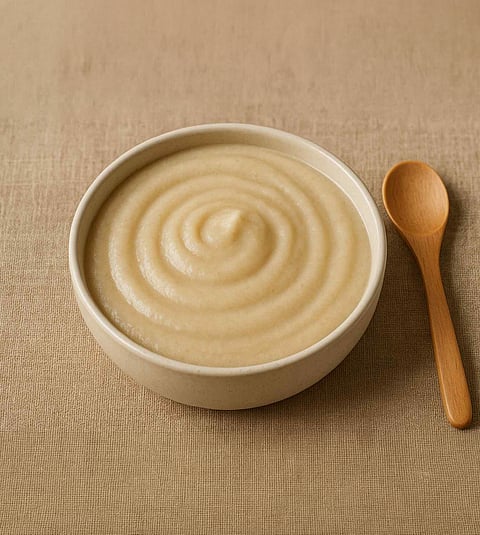
Many food enthusiasts have even been debating whether F&B industry has hit a plateau, as instant drink mix flavours have been all the rage this year. It began with Milo, a malted milk powder, taking over the city’s cafés and dessert corners. And as the year draws to an end, Cerelac, a milk-based cereal formulated for babies, has taken over the baton. Pioneering this trend is Gelateria Ciacco in Teynampet, with cold/warm Cerelac milk and Cerelac-flavoured gelato for adults.
Praveen Dante, gelatiere at Ciacco, says that the flavour had long been requested. “We have a community-driven approach to designing all our flavours and since Cerelac was highly requested and Children’s Day was approaching, we primarily introduced Cerelac gelato for adults.” Owing to occasional monsoon showers and spreading viral infections, the brand decided to introduce warm and cold Cerelac milk in cups. “Some customers jokingly said ‘Oh, at this pace you’ll end up serving the milk in feeding bottles!’, and that just stuck with us,” he shares.
Beyond going viral for its taste, the frothed dairy drink is trending for how it is being served by the café — in plastic feeding bottles (limited to 100 bottles a day) that come with a soft silicone nipple end, made specifically for children transitioning from breastfeeding, and, alternatively, in a cup.
Last weekend, the stretch of Anna Salai that cuts into Teynampet saw unusual traffic, as large numbers of people flocked to try the new treat. Netizens even reported a wait time of one to two hours.
VK Aishvarya Shree, a lawyer who learnt of the new flavour before it became a trend, shares, “I had tried the Cerelac gelato and my friend tried the cold milkshake. I honestly really enjoyed it and thought that it was creative.” She adds that Cerelac, being marketed online by content creators as a nostalgic flavour, rang true in her case. “My younger sister and I are eight years apart. It was a mischievous thing for me to do back then because I would taste her Cerelac, drink from a feeding bottle too because she would drink so,” she fondly recalls.
While content creators and food vloggers who initially raved did not question the container that the milk is served in, contention about it has been voiced by a handful who learnt of the trend from their screens, especially after seeing men sexualise the feeding bottle.

Soso, a food blogger and law student, says, “When I first saw it, I was weirded out by it. I understand that some might have looked at it as an innovative or quirky food concept. But it truly made me uncomfortable to see grown adults drinking from baby bottles and I am not able to understand the need to recreate that particular experience for adults.” Kaaviya Murali, a content creator, reasons that most parents feed Cerelac to their children from bowls with spoons and not a feeding bottle, which she believes, makes the entire concept “unrelatable” and “unnecessary”.
Referring to an increase in suggestive content for engagement, Soso urges consumers to be more mindful. Kaaviya also shifts the blame on the customers who mindlessly consumed the product served in feeding bottles simply because it was trending.
Citing one of the many instances of men sexualising the feeding bottle on social media, Kaaviya, who has come across many disturbing videos, claims, “On Sunday, I saw a video that a guy posted from Ciacco where he is drinking from a bottle while looking at a child. He captioned it ‘I scared the girl’. I didn’t know what he meant by it and it can be perceived as predatory behaviour too. The next morning, the video was deleted.”
Aishvarya, however, argues, “People sexualise a lot of other things too that we don’t speak about. For example, when I eat a banana or a popsicle, I get weird stares from men. You can sexualise anything if you put your mind to it. In this case, I wish to see it just as a bottle, not as something that is sexual.” She, however, does not condone those who are creating suggestive content with it.
Cerelac-based products are part of a short-term brand campaign. We will probably discontinue it by the end of this week.
Praveen Dante, gelatiere
Although the onus largely falls upon individuals who must take responsibility for what and how they portray something online, both Kaaviya and Soso hold the brand responsible for being an enabler. Praveen, however, defends, “We wish to promote positivity, respect, and kindness. The idea to serve the drink in a feeding bottle came from a very innocent place. As a brand, we strongly believe that if some people are turning it into something uncomfortable and sexual, it is unacceptable. If we are tagged in such posts and reels, our social media team is asking such content creators to refrain.”
Despite the setback with this one product, Soso recalls the many successful innovations that Ciacco has come up with in the past. “They served this Tirunelveli halwa flavour with malli poo, which was super creative. They had biryani-flavoured gelato and I think it takes a certain amount of creativity to experiment like this. I appreciate the brand for all that. But this feeding bottle has changed my perception and I don’t have the same respect anymore,” she concludes.
Short-lived trend’s long-term effect
Since Ciacco is not reusing the plastic bottles to ensure hygiene, an implication of this is that a large number of plastic feeding bottles with silicone — owing to the trend — will be disposed of after a single use; even if only done for a couple weeks. Social media, too, has highlighted this aspect.
Ann Anra, founder-trustee, Wasted Solutions Group, says, “Plastic and silicone cannot be disposed of well. This kind of mixed material is difficult to recycle too. When there are so many fun yet sustainable solutions for brands to explore that will not damage the environment, it is heartbreaking to see them do this without any practical purpose. At least, the company could have tied up with a waste management firm and thought of a solution to dispose of them, or could have taken the difficult route of sterilising and re-using if they were absolutely resolute.”
Praveen argues that as this was a short-term branding campaign, intended to draw attention to the business, such fixes were not considered. “Year-round, we try to limit any unnecessary waste and have opted for sustainable storage as much as possible. But we aren’t 100% sustainable,” he confesses.
The Gulf did it first!
A similar trend of cafés selling products like coffee in feeding bottles went viral in several Gulf Arab states including the UAE, Kuwait, and Qatar, in 2021. After severe backlash, many governments banned the practice and fined businesses that had given into the craze.