
Since 1945, World Food Day has been observed on October 16 to commemorate the founding of the Food and Agriculture Organisation (FAO) of the United Nations. Celebrated across more than 150 countries, this year’s theme, ‘Innovate today, nourish tomorrow’, finds a reflection in Chennai’s evolving culinary landscape.
Every week, food entrepreneurs and social media influencers add new eateries to the city’s food map. From newly opened cafes to elaborate dishes tipped to be the next big thing of the year, the city is constantly finding fresh ways to grab Chennaiites’ attention. Yet, alongside these novel innovations, a nourishing movement has been taking shape on the streets, occasionally finding its way onto our social media feeds.
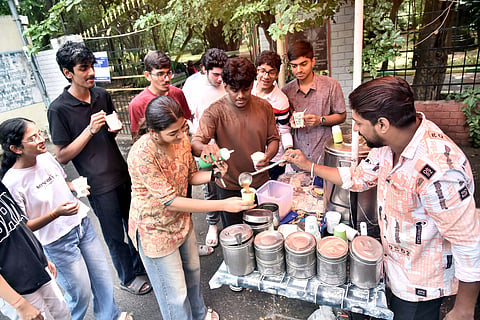
Near parks, along busy roads, and at neighbourhood hotspots, vendors serving natural juices, millet-based dishes, soups, sprouted legumes, and other foods that possess health benefits have been steadily building a loyal customer base. Many of these stalls have been around for years, introducing ingredients and preparations that offer alternatives to conventional street food.
Ahead of World Food Day, CE explores these stalls across the city, tracing their customer reception and the consistency of demand, while looking at how healthier eating habits can be incorporated into everyday life.
“For me, healthy food is food that nourishes us, makes us feel good, and fits into our life. I don’t believe there’s one perfect ‘balanced diet’ that works for everyone — because we’re all different, and so are our bodies, routines, and needs,” says nutritionist Saagarika Srinivasan of Harry’s Fitcamp.
Instead of dismissing street food completely, she explains, “Being healthy is about finding your own balance, nourishing yourself most of the time, and still enjoying food and life without guilt, sticking to your routines and health goals.”

Offering such guilt-free options for the morning walkers at My Lady’s Garden in Periamet for the past 20 years are Rahoof Ibrahim and his sisters. “My interest in this field began during my college days. Since I was free during the day, I used to help them (sisters) out. Through that experience, I developed a genuine interest, particularly in interacting with the customers,” says Rahoof, who has been running the stall for the past decade.
He began researching and creating a variety of healthier alternatives after customers expressed “a desire to make better choices to eat healthy”. His stall now offers a range of juices, soups, pulses, and legumes, including keezhanelli juice, which he recommends for jaundice; vazhaithandu juice for kidney stones and urinary tract infections; nellikai juice, which is rich in vitamin C and is said to benefit skin and hair; and pudhina juice, which aids digestion. Other offerings include murungakeerai soup, vegetable soup, verkadalai, mookadalai, pachai payaru, and a navadhaaniyam mix. He also serves special Jain soups prepared without garlic, onion, or ginger.
Expanding the menu a bit further, opposite Nageswara Rao Park in Mylapore, Renuka and her sister have been running their stall for about two decades during the morning hours, offering natural juices, soups, and legumes. “There are absolutely no powders involved; everything is completely natural. We handle the entire preparation process ourselves. We maintain strict hygiene, wearing gloves and hairnets while preparing everything every day,” she claims.
With around 24 varieties of juices, the stall offers ingredients such as aragampul, avaram poo, thoodhuvalai, soup varieties like mudakkathan and vallarai, and salads from which customers can choose, including sundal, boiled legumes, sprouted black-eyed peas, and double beans, among others.
“Vendakkai is good for managing blood pressure, arugampul helps cleanse the stomach, ABC juice for blood circulation, and drumstick leaves to boost immunity. We have a specific item for every need,” she says, explaining how she recommends different preparations based on customers’ requirements. Renuka adds, “I gained the knowledge of the ingredients from training under a man who had learnt from a traditional Siddha practitioner.”
Over the years, she has noticed customers becoming more conscious of their food choices, with children, working professionals, and loyal clients visiting the stall. “It is essential to consume healthy food for the sake of your body. You should opt for natural, wholesome foods. It’s good to cut down a bit on oily foods and items like fried rice from outside. You don’t have to avoid them completely, just reduce the intake,” she advises.
More than salads and soups
At Mylai Puttu Kadai, near Kapaleeshwarar Temple in Mylapore, Yamuna and her brother, Vedha, have taken a different approach, building their menu around millet-based puttu. What began as an attempt to offer something new in a neighbourhood filled with idli, dosai, parotta, vadai, and paniyaram stalls has grown into a venture that attracts customers across age groups.
Yamuna started with just three varieties of puttu — red rice, ragi, and raw rice — at the Mylapore Festival eight years back. “Initially, things didn’t really take off. People would just look and walk by. They didn’t really understand the idea of millet-based puttu,” she recalls. The response changed when a few customers tried them on the third day of the festival and recommended them to others. “By the last day (of the festival), I couldn’t keep up with the demand,” she says.
Today, the mobile cart features several steamers arranged on top, with the gas connection underneath. The puttu varieties include navadhaaniyam, poongar rice, mappilai samba and karuppu kavuni arisi, alongside daily options made with pearl millet and ragi, among others. The varieties follow a schedule, with special items changing through the week.
The owners say each grain has its own qualities. “Thinai is rich in fibre; kuthiravali is high in calcium; karuppu kavuni arisi is known to be associated with strength,” Vedha says. Yamuna adds that the puttu is steamed twice, first at home and then at the stall, where the layered steamers help finish the preparation.
The growing interest in millet-based food has brought customers across age groups. “Ever since everyone got smartphones, they check everything on Google. We don’t need to explain everything from A to Z; they come already informed,” Vedha says. However, rising grain and cooking gas prices have also increased the cost of running the stall, prompting the owners to adjust prices.
Healthy food doesn’t always mean short eats. At Adyar’s Vayalum Vazhvum, Murgeshan has spent the past decade experimenting with traditional ingredients and familiar dishes to offer healthier alternatives. What began as a cart selling sweet and kaara paniyarams gradually expanded to include regional favourites such as paruthi paal and kelveragu adai, before the menu evolved to feature millet-based creations.
Over time, the menu changed, with millet chaap emerging as a popular offering. Made using a blend of kambu, kelviragu, gothumai, and solam. “The dish is shaped to resemble chicken, specifically, the shape of a kebab or a ‘Soya Chaap.’ It’s becoming quite popular and is doing very well in terms of production volume,” he says.
The resemblance to non-vegetarian dishes has also piqued customers’ curiosity. “When we cook it on the tawa like that, people ask, ‘You said this was vegetarian, but it looks like non-veg.’ But when we offer them a taste, they say, ‘It’s quite good,’” Murgeshan says. He adds that the millet-based products are high in fibre and nutrients, making them an alternative for those looking to incorporate different grains into their meals.
Beyond millet chaaps, the menu includes karuppu ulundhu kali, a different variety of soup for each day, sprouted-grain parottas/kulchas, and variety rice such as vaazhaipoo biryani. “The point is, rather than just eating plain chapatis, these make for a healthier meal,” he explains. The stall also serves kulchas made with mint, coriander, and curry leaves, alongside gravies prepared with legumes such as kaaramani and pachai payiru.
Murgeshan says the decision to focus exclusively on vegetarian food was deliberate. “We wanted to go purely vegetarian as we felt that was the way to sustain ourselves in the long run, and more customers can come and eat without any hesitation,” he says. Having started with a mobile cart in Adyar, the business has since expanded to a restaurant-style setup in Saidapet.
Why eat healthy?
For Saagarika, the growing interest in healthier street food is a positive development, as it allows people to make better choices without giving up the convenience and enjoyment of eating out. However, she cautions, “But simply labelling something ‘healthy’, ‘high-protein’, or ‘low-calorie’ doesn’t automatically make it nutritious. Vendors should focus on fresh ingredients, good-quality oil, enough protein and fibre, sensible portions and hygiene. As consumers, we should look beyond the label and understand what’s actually in the food in such situations.” Small changes in preparation, she believes, can make familiar street food more nourishing without compromising on taste.
The vendors, too, see awareness translating into changing food choices. Rahoof says customers who experience what they perceive as benefits from his juices and other offerings often return and recommend the stall to others. Renuka, meanwhile, believes that learning about natural foods is only the first step. “People are becoming aware of healthy, natural juices — they see it on YouTube and elsewhere. But it’s not enough to just know about it; actually consuming it is what’s best for their health,” she says. At Mylai Puttu Kadai, Yamuna hopes that introducing children to traditional grains early will encourage them to carry these food habits into adulthood.
Affordability also plays a role in making these choices accessible. Across the stalls featured, prices range from around Rs 30 for a serving of natural juice to Rs 150 for some food options, allowing customers to explore healthier alternatives at different price points. While individual needs and nutritional requirements vary, the availability of such options on familiar streets makes it easier for people to consider what they eat as part of their everyday routines. Saagarika concludes, “Ultimately, healthier street food is a shared responsibility.”