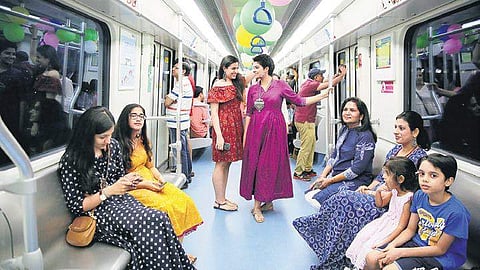

The proposal by Delhi Chief Minister Arvind Kejriwal last week to make metro and bus travel free for women in the national capital has already snowballed into a political controversy.While many have dismissed the move as just a political gimmick, others laud it, claiming that this will encourage more people to take public transport, take more vehicles off the roads and give some relief to the over-polluted city.
The question that remains unanswered is whether the move is economically viable.
Going by the numbers, about 30 lakh-odd passengers travel by the Delhi Metro and women commuters account for 30 per cent of this. The total number of bus passengers is still high at around 40 lakh, out of which 20 per cent are women. The state government claims that even though free travel for women this would cost the exchequer about `800 crore, the move will go a long way in improving air quality and encourage more women to use metro.
“The opposition is more political in nature. Even central government programmes talk about promoting green mobility, promoting public transport, etc. And, so far as cost is concerned, it can be matched with a hike in parking charges or other user charges. We will come up with all the details when the fine print are ready,” a senior Delhi government official told this publication.
According to Amit Bhatt, director of integrated transport at the World Resources Institute (WRI) India, “free rides alone are not enough to encourage more women to take up public transport. The main concern is safety and that is the reason women will not mind spending little extra”.While the Delhi Metro largely remains a safer option for women compared to other modes of travel, last mile connectivity remains an issue. Deserted bus stops, poor lighting and a lack of adequate redressal mechanisms make buses comparatively less safer.
But, the Delhi government has also proposed that installing 70,000 CCTV cameras across Delhi this week, with plans to install 150,000 more. While many experts are still sceptical on free rides would encourage more upper and middle-class women to take the metro, they do believe that the move will certainly benefit women from underprivileged sections.
Delhi is not unique in proposing free public transport, however. Many other cities around the world are experimenting with similar measures. Luxembourg, for instance, plans to make public transport free from March 1, 2020, to help commuters with low salaries and encourage car drivers and users to use public transport.
