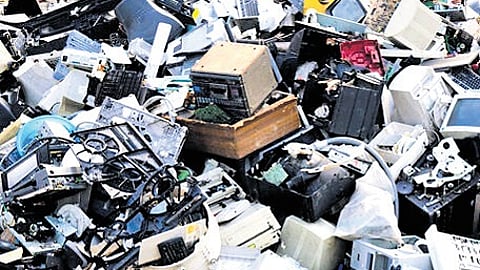

NEW DELHI: To tackle the rising e-waste menace, the Delhi govt has made recycling of e-waste mandatory in all procurement contracts. The city government has asked all departments and autonomous bodies to include an e-waste recycling clause in tender documents.
As per the new directive, any e-waste generated during contract execution must be handed over only to recycling agencies. Officials believe the move will ensure environmentally sound disposal of e-waste.
The directions came after the latest meeting of the steering committee of the National Clean Air Programme (NCAP) that was attended by the Chief Secretary last month. In the meeting, the committee underscored the need for appropriate regulatory interventions to ensure environmentally sound disposal of e-waste.
“In a bid to address air quality concerns in Delhi-NCR, the government reviewed the progress under the National Clean Air Programme (NCAP) through its Steering Committee. The committee highlighted the urgent need for appropriate regulatory measures to ensure the environmentally sound disposal of e-waste,” stated an order issued by the Finance Department.
“Accordingly, it has been decided that all departments and autonomous bodies under the Delhi government must include a mandatory clause in tender documents stating that any e-waste generated during contract execution must be disposed of through authorised recycling agencies,” it added.
According to estimates, Delhi generates 152,000 metric tonnes of e-waste annually, much of which ends up in informal recycling sectors or landfills. The toxic heavy metals like lead, mercury, and cadmium, along with hazardous chemicals, leach into the soil and groundwater, contaminating natural resources and posing long-term risks to agriculture and water supply.
