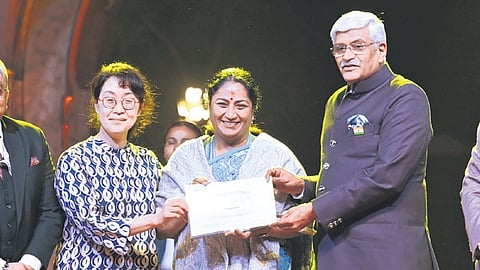

NEW DELHI: After Deepavali, the festival of lights, was on Wednesday inscribed on UNESCO’s Intangible Cultural Heritage list, it sparked celebrations across the capital to mark the earning of the coveted tag.
The decision was taken during UNESCO’s key meeting at Red Fort, where representatives from 180 countries participated. To mark the milestone, the Delhi government organised a grand cultural ceremony at Dilli Haat, INA.
Chief Minister Rekha Gupta lit the ceremonial lamp, offered prayers to Lord Ram and extended greetings to the nation.
The event featured traditional folk dances and cultural performances, transforming the venue into a vibrant celebration of Indian heritage.
Gupta said the inscription marked a “historic global recognition of India’s civilisational values” and symbolised the universal appeal of Diwali’s core messages—love, harmony, hope and righteous living. “This is a proud moment for 1.4 billion Indians. The world has acknowledged the spiritual essence of Deepavali,” she said, adding that the honour strengthened India’s cultural standing globally.
The chief minister linked the achievement to Prime Minister Narendra Modi’s vision of “Vikas bhi, Virasat bhi,” saying that India was progressing rapidly while firmly rooted in its cultural traditions.
“A festival that lives in our homes and hearts is today recognised by the world as a cultural treasure shared by humanity,” she wrote on X, calling the inscription a “golden chapter of Indian culture on the global stage”.
Gupta said previous global recognitions, including those for Yoga, Kumbh, Durga Puja and Garba, had showcased India’s rich and diverse heritage, and Diwali’s inclusion further affirmed the “universality of Sanatan traditions”. Cabinet Ministers Ashish Sood, Manjinder Singh Sirsa, Kapil Mishra, MLA Anil Sharma and other dignitaries attended the government’s celebration.
Gupta also announced that Delhi would host a special “Bhavya Deepavali” this year to commemorate the UNESCO recognition, saying the entire capital had been illuminated with rows of lamps at public spaces and monuments, including the Red Fort.