
The year was full of changes, challenges, and shifts. this newspaper broke many stories of importance, covered areas of public concern, and made an impact through meaningful reportage. Delhi, as a city, has had its own share of problems, beginning from infra decline, waste management issues, to social security measures falling short, and cultural amnesia. some of our reports have prompted immediate action from authorities. take a look at a few stories that caused change in 2025.
Disappearing trades of Old Delhi
There is a magical charm to Old Delhi’s streets and lanes, each wall telling a story. TMS published a series on disappearing trades of the city. Lanes like Suiwalan and Ballimaran—once teeming with skilled artisans creating intricate dabka, nakshi, and zari work—now stand silent. At Nai Sadak, manual bookbinding struggles to survive against the tide of mass production and changing times. Yet, amid this change, few artisans continue to stitch the last threads.
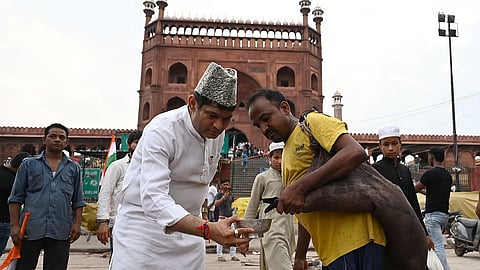
In Mughal-era Delhi, the mashaq walas, with heavy goatskin bags slung across their shoulders, were a common sight. But now, only a few are seen, like 35-year-old Mohammad Laique. The art of kalai is almost a distant memory—except in one small shop in Matia Mahal. For nearly 90 years, this humble shop has been home to the last practitioners of kalai, the ancient craft of polishing cookware with a thin layer of tin. In a crumbling shop tucked inside Sitaram Bazar, 71-year-old Aziz-ur-Rehman is the last of Old Delhi’s deed writers—men who once turned verbal agreements into binding words in elegant Urdu. The craft of making chandi ka warq, the delicate silver foils for food, was once a thriving cottage industry, but was slowly killed by mechanisation.
Ifrah Mufti
Shelter home truths wake up govt
As the summer temperatures soared in the city this year, a TMS team visited the city’s shelter homes, only to find that they were ill-maintained, had scant resources, and were overflowing with hapless individuals looking for a roof. Delhi’s shelter homes, run by the Delhi Urban Shelter Improvement Board and various NGOs, are meant to offer respite to the homeless. However, with the growing crisis of urban migration and inadequate housing, these shelters were under strain, struggling to accommodate an increasing number of residents.

Ten days after TMS reported this issue, Urban Development Minister Ashish Sood paid a surprise visit to five such shelters and confirmed many of the issues flagged in the story. Calling the revelations “deeply troubling”, Sood announced that complaints of large-scale corruption and mismanagement would be investigated by the vigilance department, and, if needed, the state government would recommend a CBI probe. “Funds and facilities meant for the homeless are being siphoned off in collusion with NGOs and corrupt officials,” he alleged, stating that complaints had been pouring in through letters and public memorandums.
Anup Verma
Pothole hazards trips civic bodies
Delhi’s image of a developed city is slowly falling into decay, as a TMS team found while reporting the cracked footpaths, unattended sewage sludge, piles of garbage, and open drains. Despite the government’s push for beautification and pedestrian-friendly reforms, the ground told a different story. From busy markets to residential areas, broken footpaths and pavements are all too common. Areas like Laxmi Nagar, Vasant Kunj, Saket, Lajpat Nagar, Karol Bagh, and parts of east Delhi are an exhibition of cracked pavements, exposed drainage, and uneven surfaces that pose public hazards. Just weeks after this newspaper reported this deterioration, civic authorities jumped into action.
The residents of areas like Geeta Colony were greeted with a clean road and cleaner surroundings. The change came as a relief to local residents and shopkeepers. Poonam Verma, a homemaker, said, “For days, we were living with foul smell right outside our homes. Now it is a relief to see the road clean. We are grateful the issue was highlighted and taken seriously by the authorities as well.” A persistent issue in the city, this change is just the tip of the iceberg with numerous issues left unaddressed, needing urgent attention.
Nitin Rawat
Afghan stowaway sent back home
In a daring and dangerous act, a 13-year-old teenager flew from Afghanistan to Delhi hidden in the rear wheel well of an aircraft. The boy boarded KAM Air flight RQ4401 from Hamid Karzai International Airport in Kabul, survived the 94-minute-long flight, and landed safely in Delhi. The incident, first reported by this newspaper, raised alarms across Indian and Afghan aviation security establishments. Survival for wheel well stowaways are exceptionally rare due to hypoxia (oxygen deprivation), hypothermia, frostbite, and mechanical hazards like being crushed by retracting gear, or falling during landing. Globally, one in five of all who attempt surive. The incident came to light when a ground handler spotted the boy walking in the restricted apron area after the passengers had disembarked. The Central Industrial Security Force took the teenager into custody, and later handed him over to airport police. The boy was reportedly trying to flee to Iran but boarded the wrong flight. Sources said the teenager tailed legitimate passengers to bypass security checks in Kabul and entered the aircraft undetected. The minor stowaway, immune to legal proceedings, was sent back home by the same airline.
S Lalitha