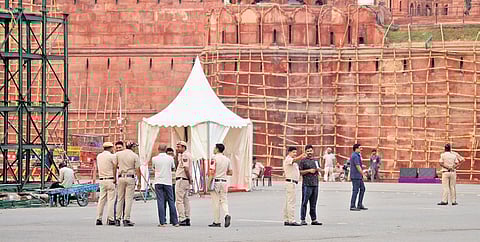

NEW DELHI: In the lead-up to Independence Day, the Delhi Police has intensified security measures across the national capital, uncovering significant lapses at over 100 key locations during a sweeping inspection drive.
Conducted by the Special Cell over five days, the checks focused on high-footfall areas such as hotels, railway stations, bus terminals, and metro hubs, aimed at evaluating the capital’s preparedness against potential terror threats. Sources revealed that the findings raise serious concerns about the functionality of security infrastructure, personnel deployment, and overall vigilance across several districts.
The Special Cell in Northeast Delhi reported lapses at 16 locations, followed by 13 in East, 12 each in Shahdara and North, 11 in Central, 10 in Southeast, nine in South, eight in Metro, seven in Rohini, and six in Dwarka, sources said.
“Multiple teams of the Special Cell undertook a five-day security inspection drive across various parts of Delhi in view of the high alert surrounding the upcoming national event,” said a source.
During the inspection, teams flagged non-functional CCTV cameras in hotels, parking areas, locations near metro stations, eateries within metro premises, and several areas near railway stations and bus stands. “The teams also inspected non-functional door frame metal detectors (DFMDs), gaps in security personnel deployment, and improper maintenance of visitor records,” a source added.
Another officer, speaking on condition of anonymity, said the Special Cell will write to the DCPs of the concerned districts to improve security in their respective areas.
The inspection, carried out discreetly by trained teams, was aimed at assessing the city’s readiness to respond to any terror threats. It specifically targeted public spaces known to attract large crowds.
“Teams noticed a lack of functional DFMDs at various entry points. At several public places, metal detectors were either switched off, lacked power supply, or were simply not in working condition,” the officer said.