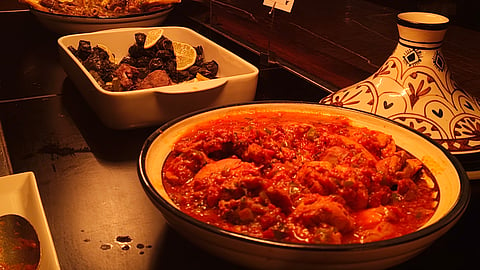

Azerbaijani cuisine is defined by fresh herbs, saffron, sumac, pomegranate, dried fruits, nuts, lamb, fish and fragrant rice. What makes it distinctive is its balance: delicate herbs alongside rich meats, subtle spices rather than excessive heat, and strong seasonal influences. It reflects Azerbaijan’s landscapes, from mountains and forests to the Caspian Sea, creating remarkable regional diversity and its culinary heritage.
Last week, K3, by JW Marriot, hosted 'The Caspian Table', a five-day culinary experience celebrating the rich food traditions of Georgia and Azerbaijan. In a conversation with TMS, visiting chefs Asif Hidayetov and Latif Meybullayev from CDP, JW Marriott Absheron Baku discussed the nuances of the cuisine.

Myriad influences
Azerbaijan’s position between Europe and Asia has created a layered culinary identity, they said. “The Persian influence appears in rice dishes, saffron, dried fruits and sweet-sour combinations; Turkish traditions contributed to the grilling, breads and meat preparations; the Russian influence is seen in certain preservations and urban dining practices; and Caucasian traditions shaped herbs, nuts, dairy and communal cooking. Hence, the Azerbaijani cuisine absorbed these influences while retaining its own character,” they added.
On 'The Caspian Table' menu, Plov, which is Pulao in India, best represented Azerbaijan’s culinary identity. It is far more than rice; it reflects celebration, hospitality and regional creativity. "Fragrant rice is paired with ingredients such as saffron, dried fruits, nuts or meat, depending on the style. For Azerbaijani families, preparing and serving plov often becomes a ceremonial expression of generosity, pride and togetherness," they said.
The cuisine changes noticeably across Azerbaijan’s regions. Baku has seafood and cosmopolitan influences. Ganja is known for hearty regional dishes and distinctive breads. Sheki is celebrated for rich culinary traditions, sweets and dishes influenced by its mountain environment.
'The Caspian Table' had an assortment of regional sweets, including Pakhlava, Shekerbura, Gata and Churchkhela. Dishes such as qutab, khinkali and chicken chakhokhbili took the centre stage. Live stations served freshly prepared Khachapuri, Lavash, Shashlik and Lyulya Kebabs, offering guests a taste of traditional cooking techniques.
Fire is central to Azerbaijani cooking, not simply as a technique but as part of the culinary culture. Charcoal grilling brings out the natural flavours of lamb, chicken, vegetables and fish, while high heat creates distinctive aromas and textures. Shashlik and other grilled preparations are closely associated with a social experience.
Chef Anuraag Narsinghani, director of culinary at Marriott, Aerocity, said that they learned a lot about working with fire from the visiting chefs. Indian cuisine is about the use of oil and ghee and roasting and tossing the food in a gravy or tandoor, but in Baku importance is given to the grilling and slow cooking. The common factor, though, is ghee. “The approach to Azerbaijani food, he said, should be without expecting Indian spice levels—the cuisine celebrates ingredients through subtle, layered seasoning throughout,” he said.
The visiting chefs said that they wanted to bring ingredients that immediately recall Azerbaijan—saffron, pomegranate, dried fruits, walnuts, hazelnuts, herbs and traditional spices. "The challenge in India was not replacing these ingredients but preserving their character while adapting quantities and availability. Some produce and speciality ingredients required careful sourcing. We also adjusted techniques slightly to suit Indian kitchen equipment without compromising authenticity wherever possible," they said.
Pakhlava and shekerbura are especially associated with Novruz, Azerbaijan’s spring festival, when families prepare and share them together. Gata reflects regional traditions, while Churchkhela is more strongly associated with the wider Caucasus, particularly Georgia. "These sweets are valued not only for flavour but also for memories, craftsmanship and togetherness today," the visiting chefs said.