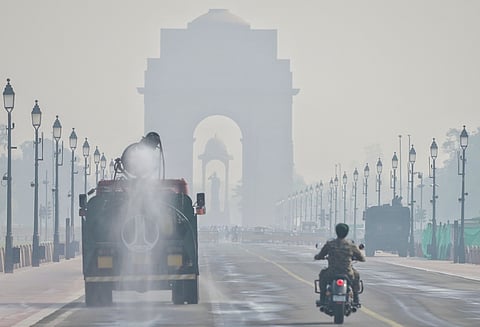

NEW DELHI: Delhi’s winter pollution crisis appears to have a persistent geography, with the same neighbourhoods repeatedly emerging among the city’s most polluted locations over the past five years, pointing to the need for targeted interventions beyond the government’s city-wide measures.
An analysis of winter air quality data by the Centre for research on energy and clean air (CREA) from 2021-22 to 2025-26 has identified eight neighbourhoods including Jahangirpuri, Anand Vihar, Nehru Nagar, Mundka, Rohini, Wazirpur, Vivek Vihar and Bawana that have consistently featured among Delhi’s 10 most polluted monitoring locations.
Of these, six locations figured in the top 10 in all five winters, while Vivek Vihar and Bawana made the list in four out of the five winters, indicating that pollution in these areas is not merely a seasonal or temporary phenomenon but a recurring problem.
The average winter PM2.5 concentration across the eight locations was nearly three times India’s daily National Ambient Air Quality Standard (NAAQS) of 60 micrograms per cubic metre (µg/m³). The findings underline the sustained exposure to hazardous particulate pollution in these neighbourhoods, particularly during the winter months when unfavourable meteorological conditions further aggravate air quality.
“CREA analyst Dr Manoj Kumar who shared the data on Wednesday said, “The pattern is already visible this winter. An assessment of air quality data between October 1 and November 16, 2026, shows that Jahangirpuri, Vivek Vihar and Rohini have already featured among the city’s 10 most polluted monitoring locations. Their average PM2.5 concentration during this period was around twice the prescribed daily standard.”
While these eight neighbourhoods represent the city’s highest-ranking pollution hotspots, they are not the only areas grappling with unhealthy air. Elevated PM2.5 levels continue to affect several other monitoring locations across the national capital.
“The repeated appearance of the same neighbourhoods ove0r five consecutive winters has put forth questions about the effectiveness of existing pollution-control interventions and whether they are adequately addressing location-specific sources of emissions,” said Kumar.
He also added, “While the rankings may change as the winter progresses, the recurring concentration of pollution in these areas highlights the need for a more localized approach, including identifying the dominant sources of emissions in each neighbourhood and strengthening monitoring and enforcement accordingly.”
