
“Our goddess doesn’t fast, she feasts,” declared a Bengali friend during Durga Puja, drawing a distinction between Bengal’s festive indulgence and North India’s Navratri fasts. Coming from a Punjabi-Bengali household, I felt the subtle barb beneath the playful proclamation. In a country where festivals have long brought diverse communities together over food, it was telling that even our plates had become battlegrounds for cultural superiority.
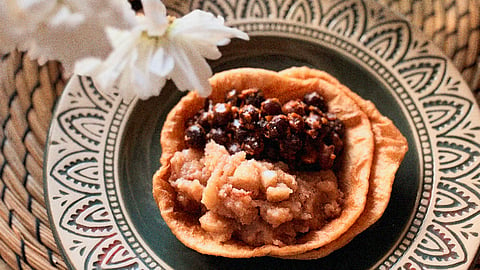
I am a Punjabi who skips the customary Navratri fasts but embraces Durga Puja wholeheartedly. On Ashtami, I prepare poori, chana and halwa as prasad, sharing it with my domestic help’s daughter, the neighbour’s baby girl and, of course, my golden retriever, who is as much a daughter to me as anyone else. For me, the ritual is less about rigid observance and more about the simple joy of feeding others.
Perhaps this is what we are in danger of forgetting. Festivals have never been merely about the rituals we perform; they are also about the kitchens we enter, the food we exchange and the communities we build around a shared appetite for life.
Over the past decade, self-appointed custodians of faith and culture have sought to determine what citizens should eat, often under the guise of protecting religious sentiment. Attempts to impose vegetarianism on Durga Puja celebrations and pandals have exposed the fault lines between private belief and public coercion, provoking resistance from communities for whom food is inseparable from religious and cultural identity. The irony is difficult to miss. Durga, worshipped as the mother who protects her children, is being made the subject of arguments over who is entitled to claim her and which culinary traditions are permissible in her name.
To reduce these traditions to political signalling is to forget the histories, seasons and emotions that breathe life into them. In North India, Navratri’s arrival with the changing season brings fasting and restraint, while in Bengal, Durga’s homecoming is an occasion for bhog, feasting and abundance. One is steeped in devotion, the other in celebration, but both are expressions of love, faith and belonging, shaped by generations of people who have found their own ways to welcome the divine.

Food, of course, has always been political. It carries the weight of caste, class, religion, gender and access. It tells us who cooks, who eats first, who is invited in and who is asked to stay away. In contemporary India, the policing of food has become another means of controlling public life, turning everyday choices into declarations of allegiance. The danger lies not in the fact that we eat differently, but in the growing insistence that we must eat alike to belong.
As someone who writes about Delhi through its food, I find this particularly troubling. The city’s culinary character has been shaped by migration, displacement, trade and the mingling of communities. Its food culture is not a pristine inheritance, sealed off from outside influence. It is a living, changing archive of encounters.
Yesterday, we bid farewell to the goddess. As the lights dimmed, the drums fell silent and the last plates of festive food were cleared away, I found myself thinking about what we carry forward after the celebrations end.
Let the Bengali feast, let the Punjabi offer her poori-chana-halwa, let the fasting devotee observe her vrat and the neighbour who does not fast join the celebrations. We need not share the same rituals, or even the same appetite, to share a table. In a country as diverse as ours, the real test of faith and culture may well lie in our ability to make room for someone else’s.
The goddess will return next year. When she does, may we welcome her into a country less concerned with policing its plates and more willing to feed its people. After all, a civilisation that cannot make room for difference at the dining table has little hope of finding common ground beyond it.