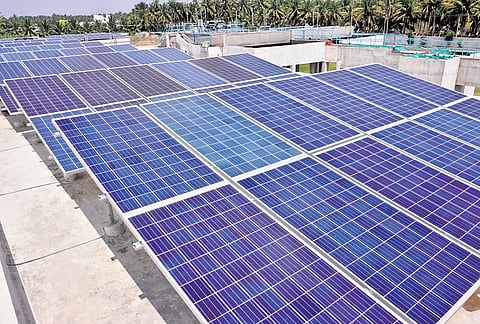

NEW DELHI: The Delhi government has approved a major change in its solar policy, allowing eligible households to install rooftop solar systems of up to 3 kW without paying any upfront cost. The cabinet approved the amendment on Tuesday to help expand rooftop solar use.
Domestic consumers with average monthly power consumption of up to 400 units in 2025-26 will now be eligible for a rooftop solar system of up to 3 kW, subject to technical feasibility. Consumers will not have to make any payment for installation.
The Centre provides a subsidy of Rs 78,000, while the Delhi government will provide another Rs 78,000 as capital subsidy. The state government will also cover, through an additional top-up, any difference between the subsidy amount and the tendered cost of the solar plant.
Chief Minister Rekha Gupta said the earlier system required consumers to pay upfront for installing solar panels, while financial benefits came later. The revised policy shifts the financial support to the installation stage so that households do not face an initial burden.
The government has set a target of installing solar systems on 2.30 lakh rooftops by March 2027. It also aims to add 500 MW of rooftop capacity under the solar policy by the same deadline. So far, 10,073 solar systems have been installed.
The policy has reduced the time taken for net metering for residential solar systems. The process, which earlier took about 75 days, will now take 25 days. Application and registration fees for residential solar systems of up to 10 kW have also been completely waived.
The solar systems will be operated and maintained free of cost by selected vendors for the first five years. After that, consumers can opt for services through DISCOMs.
