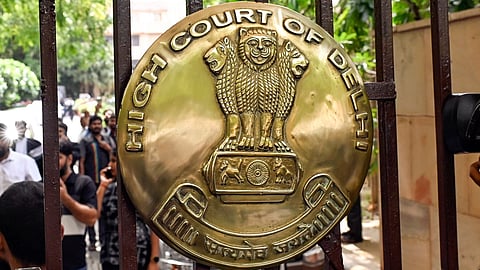

NEW DELHI: The Delhi High Court has sought responses from the Centre and the National Testing Agency (NTA) on a petition challenging the decision to re-conduct the UGC-NET June 2026 examination for English.
The English and Commerce papers are scheduled to be re-conducted on September 9, while the Sociology paper will be held on September 10.
Justice Jasmeet Singh issued notices to the Centre and the NTA on a plea filed by Parul Sheoran, a candidate who appeared for the UGC-NET June 2026 examination.
On August 31, the High Court also directed the authorities to take a decision on refunding the examination fee to candidates concerned. The matter has been listed for further hearing on October 6.
Sheoran has sought quashing of the NTA's August 16 notice directing the re-conduct of the UGC-NET June 2026 examination for English.
The plea further sought to declare this decision as arbitrary, unreasonable, procedurally unfair, and violative of Article 14 (right to equality) of the Constitution. It claimed that the decision to re-conduct the examination was taken without disclosing the material forming its basis and without following the procedure prescribed under the UGC-NET June 2026 Information Bulletin.
The petition sought a direction to authorities to declare or process the results of the examination already conducted in English in accordance with the applicable procedure.
It said that in case the court permits or upholds re-conducting the English paper, the authorities be directed to refund the examination fee already paid by the petitioners for the original examination, without prejudice to their right to appear in the re-conducted examination without payment of any additional fee.
The NTA conducted the UGC-NET June 2026 examination from June 22 to 30 across 87 subjects for award of Junior Research Fellowship (JRF), eligibility for assistant professor, and admission to PhD programmes.
In a public notice, the NTA has said it had received several complaints about multiple errors in the question papers of the three subjects and formed a committee to look into these issues.
According to the committee's report, "the three papers had many factual, typographical, and translation errors, including mis-spelt names of prominent scholars, garbled book titles, errors in the stem wording of questions, grammatical errors, gender and number agreement errors, punctuation mistakes, and non-standard coined terms for established concepts, as well as repetition of a significant number of questions previously administered."
