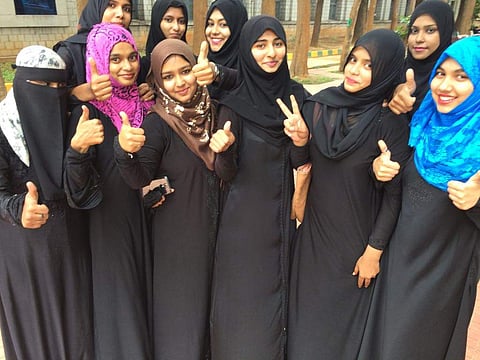

HYDERABAD: Twenty-six-year-old Shahjahan Begum is elated following Tuesday’s Supreme Court verdict against the practice of Triple Talaq. However, the woman who was wedded to a 63-year-old NRI and pronounced an instant triple talaq via Whatsapp a few months ago wants more reformation.
“I want the court to also punish my ex-husband and many others like him who have used a legal privilege to destroy women's lives for so many years,” rued the young woman from a poverty-stricken family in Old city.
She was married off to Minhaj Uddin in November 2015 who had been married twice before. “When I went to Saudi to live with him, it soon became clear that he had married me only to take care of him in his old age as others had abandoned him. He exploited me physically and used to make me work hard throughout the day to attend to his needs,” said Shahjahan. Four months later, he compelled her to go back to India. “After I returned to my in-laws in Hyderabad, I was sent back to my mother. And a few months back, even without telling me, he pronounced triple talaq on WhatsApp from Saudi. My brother received the WhatsApp talaq,” she recalled.

On the other hand, forty-year-old Maleka Begum is toiling day in and out to raise her three kids after being cheated by her husband. “I abide by Sharia but I also believe that the practice of triple talaq is draconian. It has finished me and so many women,” said the woman who was married to one Syed Abdul Kareem who works as a ticket collector with the railways.
“For a long time, he stopped sending me money and used to beat me up on his visits to Hyderabad. Once I visited him to find out why he had become so indifferent and caught him living with another woman,” said Maleka. Following this, Maleka’s husband also took her signature on two blank papers and got a khula and talaq document printed on each paper respectively.
This is the kind of confidence the privilege of being entitled to pronounce triple talaq to their wife at one go has given these men. I embrace the judgment but I would also urge the court to look into the question of alimony and property rights for women like us,” she said.
A tearful Maleka also wonders what sanctity a law holds when it compels a woman to raise three children alone at age 40 and frees their father of every liability. It is also being debated that the judgment has outlawed only instant triple talaq but the standard practice of Talaq ul Sunnat — where the talaq involves a waiting period of three lunar months between the first talaq and the confirmation of divorce — still exists. Flavia Agnes, a womens’ right lawyer said that the judgment is being hyped beyond proportion, there still remains a long journey for Muslim women to achieve equal status as men.