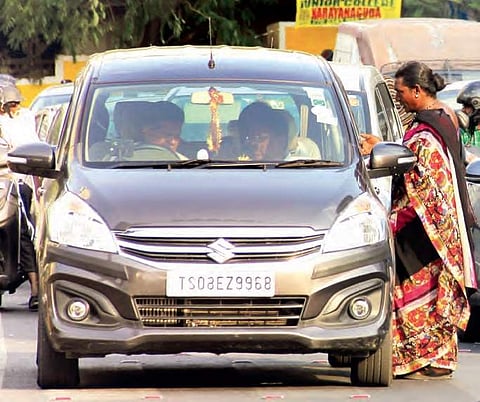

HYDERABAD: Anil (named changed) steps out of his house in shirt and trousers, with a bag slung over his shoulders. Once he reaches a safe distance from his house, he finds a place to change into saree and blouse. He decks himself up with some jewellery, ties his hair into a bun and sets out to beg. Addas, select traffic signals and crowded places in the city are some places Anil frequents seeking alms. Anil has skilfully mastered the Hijra clap, an art in itself, that he uses bless people in return for money. After spending a few hours on the street and earning a cool Rs 2,000 on an average, Anil changes back into his shirt and trousers and heads home.
Though crossdressers are defined as men who occasionally wear clothes, makeup, and accessories culturally associated with women as a form of gender expression, there are many like Anil in Hyderabad who do the same to eke out a livelihood. And since the attack on Saturday night on three crossdressers by a mob numbering over 1,000, these people are terrified to go about begging, which they say is the only way to sustain themselves. People like Anil say the story of how crossdressers became beggars dates back to several decades. It began at a time when drama companies and street theatres were popular and male actors donned the role of women, says Anil.
“Our livelihood died along with the popularity of drama. Since there was no other opportunity for people like us, we took this up as a profession,” he says. However, as time passed, easy money that comes with the Hijra clap did attract a lot of young men who saw this as a profession. But not all are happy with this, especially the transgender community which feels the crossdressers are ‘ruining’ their name and opportunities. The Hijra clap, transgenders say, which was used to raise an alarm or communicate a message among the community, is now causing fear among public.
As a result, though the transgender community condoned the death of the crossdresser, it was quick to point out that the victim was not from their community. They are of the belief that the stigma associated with them has intensified because of people who crossdress, not as a form of gender expression but to beg for money. “We have been fighting hard to become a part of the mainstream society. But because of certain activities of these crossdressers, like touching people while begging and entering homes of people uninvited, our image is getting tarnished,” says Chandramukhi Muvvala, who belongs to the transgender community. “It has become an obstruction even at the policy level. People either run away from us or attack us.”
However, activist G Krishna of Suraksha Society, who has been working with LGBTQ community, says crossdressers are not in the wrong either. “They need some source of income. They don’t have many other options,” he said.