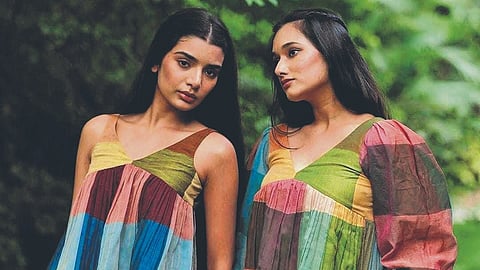

As fashion increasingly embraces conscious choices, few textiles have stood the test of time quite like India’s handlooms. Ahead of National Handloom Day on August 7, the spotlight once again falls on a craft that is no longer confined to heirloom sarees or festive wardrobes. Today’s designers are reimagining handwoven fabrics through contemporary silhouettes, versatile styling and modern storytelling, ensuring that these age-old weaves find a place in everyday wardrobes.

Across the country, handlooms are being transformed into jackets, dresses, co-ord sets, shirts and accessories without compromising the craftsmanship that makes them unique. It is this balance between preserving heritage and embracing innovation that is shaping the future of Indian fashion. Among the brands championing this movement is city-based Chitiki Looms, founded by designer T Vyshnavi, whose creations celebrate traditional weaves while giving them a distinctly contemporary identity. “Modernising handloom is not about changing the craft; it’s about changing the way people connect with it. At Chitiki Looms, we believe every weave has a story, and our focus is to present that story in a way today’s generation can relate to. Through contemporary styling, digital storytelling, sustainable practices and innovative product development, handloom is becoming a part of everyday fashion rather than being reserved only for special occasions,” says Vyshnavi.
For Vyshnavi, every design begins with respecting the original weave and the artisan behind it. “My experiments focus on colour palettes, styling and product innovation rather than altering the identity of the craft. We have worked on contemporary interpretations of traditional weaves, fusion concepts like Kasavu and Pochampally Ikkat, modern silhouettes and handcrafted accessories using handloom fabrics. Our goal is to make handloom aspirational, wearable and relevant for every generation while preserving its authenticity,” she shares. She believes the next generation values purpose as much as aesthetics. “The youth don’t just buy products; they buy purpose, stories and experiences. We need to educate them about the craftsmanship behind every fabric, show the people who create it and explain why handloom is sustainable. Fashion has to become more versatile, comfortable and accessible, with products they can wear daily. Through social media, workshops, styling sessions and transparent storytelling, we can bridge the gap between traditional weaving communities and modern consumers. If young people understand the value behind every thread, they won’t see handloom as old-fashioned, they’ll see it as meaningful,” explains Vyshnavi.
A similar philosophy drives Swathi Matam, founder of Taram and Myriti, labels known for their elegant interpretations of handwoven textiles. Her creations, worn by several celebrities, are rooted in traditional craftsmanship while speaking the language of contemporary fashion.
“Handlooms today are no longer limited to festive occasions or traditional silhouettes. The biggest shift has been in making them relevant for everyday life. Designers are blending age-old weaving techniques with contemporary cuts, lighter silhouettes and versatile styling, making handloom a part of the modern wardrobe rather than something reserved for special events,” says Swathi. Her design philosophy places the textile at the forefront. “At Taram, the fabric is always the hero. Our approach has been to retain the authenticity of handwoven textiles while experimenting with silhouettes that today’s women naturally gravitate towards — co-ord sets, dresses, shirts, jackets and easy everyday separates. We also work with thoughtful colour palettes and minimal detailing so the craftsmanship remains the focal point. The idea has always been to make handloom look fashionable while ensuring it feels effortless to wear every day,” she adds.
As designers continue to reinterpret India’s weaving traditions for a new generation, handloom is proving that heritage and modernity need not exist at opposite ends of the fashion spectrum. Instead, every thread is becoming a reminder that the future of fashion can be both rooted in tradition and effortlessly contemporary.