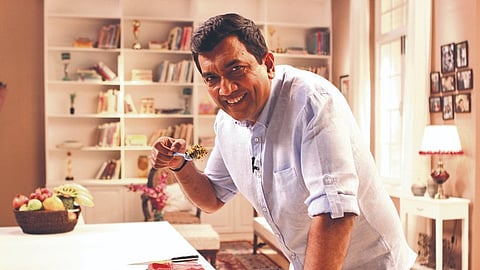

Celebrity chef Sanjeev Kapoor remains one of India’s most influential culinary icons. From hosting the iconic television show Khana Khazana, he will now be seen on MasterChef Australia soon. He has spent decades shaping the way Indians cook, eat and think about food. As he continues to take Indian cuisine to global audiences, he reflects on his remarkable journey, the evolution of food culture, his television career and the joy of cooking in a conversation with CE.
Excerpts
You have been in the food industry for decades now. What has changed?
Not as much as people think. We often assume there has been a huge transformation because food is constantly being discussed and analysed. But food evolves through cultural shifts, and those changes are usually gradual. Our fundamental taste preferences have remained largely the same. We still enjoy flavours that are khatta (sour), meetha (sweet), teekha (spicy) and namkeen (salty). Likewise, textures that people disliked decades ago such as slimy or slippery foods are still generally unpopular.
Where the real change has happened is in technology, accessibility and mobility. Today, food travels much faster. You can order restaurant food to your office within minutes, enjoy authentic Andhra cuisine in Delhi or Japanese food in Goa. That wasn’t as common earlier. Even international brands adapt to Indian preferences. Coffee chains serve milkier, creamier coffee because that’s what Indians enjoy. Burger chains tweak their menus with crispy textures, spice and creamy sauces. Even mayonnaise has evolved. Traditionally it was made with eggs and oil, but today many versions use milk solids to better suit Indian tastes. Another major change is the blurring of the line between home food and restaurant food. You can now find home-style meals in restaurants, while restaurant-quality food is easily available at home through deliveries. These are the biggest changes — not the taste itself, but how food is produced, transported and consumed.
Tell us about Khana Khazana, which entered the Guinness World Records in 2017.
Oh my God! Before it started, everything was new and exciting. The producers handed me a script and told me to memorise it by standing in front of a mirror. I tried, but I wasn’t happy with my expressions. We shot the opening sequence at Juhu Beach before sunrise. The shirt they gave me looked more like a printed raincoat than a shirt. I thought I looked like a joker! After several unsuccessful attempts, I finally told the team, “You’ve tried your way. Now let me do it my way.” I did it in a single take. From that moment onwards, everyone realised I should simply be myself. I decided everything — from what dishes would be cooked to how they would be presented. The show was always fun, although I wasn’t particularly fond of some things, like the wardrobe, makeup or being told to sleep early before shoots. At the time I was working in a hotel, so that wasn’t practical. They even suggested I get a facial, something I had never done before and didn’t particularly enjoy. I hosted Khana Khazana for nearly two decades, so naturally it holds countless wonderful memories.
Which episode remains closest to your heart?
The very first one. Interestingly, I wasn’t even supposed to shoot that day. Someone else couldn’t make it, so I stepped in without any preparation. I created two dishes on the spot, and the episode became incredibly popular. That one episode changed everything that followed. I still remember the very first dish I cooked, and many restaurants remember it too. I believe it not only changed my life but also transformed the way Indians looked at food.
Tell us about your appearance on MasterChef Australia.
Viewers are going to see a very exciting episode. What makes MasterChef Australia special is the way it captures not only cooking but also the emotions of the contestants. It’s an intense competition, yet the atmosphere remains warm and friendly. Their storytelling is exceptional. That’s where the MasterChef franchise began, and today it has versions across many countries, including India in multiple languages. For me, Khana Khazana will always be India’s pioneering food show, while MasterChef Australia remains the benchmark for cooking competitions. Their respect for the craft, for the contestants and for the entire creative process is admirable. They strike a remarkable balance between competition and entertainment. I’ve worked on MasterChef India, but in Australia I spent a couple of months with the team, and what stood out was their sense of family. It never felt like just another television production. Everyone genuinely cared about creating something meaningful, and that reflects on screen. What they’ve achieved is truly remarkable.
What is the most enjoyable aspect of cooking?
The unpredictability. Creation is never predictable. When you’re trying something new, you’re bound to make mistakes, and that’s perfectly fine. When I first became a chef, we served cheese and pineapple as cocktail snacks. During one summer, cheese wasn’t available because milk products were restricted in North India. So I tried substituting paneer. The combination turned bitter. I repeated it, and it was still bitter. That’s when I understood how ingredients interact differently. Those discoveries are exciting. It’s like launching a satellite. If it fails, there’s disappointment. But discovering why it failed and learning from it, that’s where the real excitement lies. People like us don’t fear failure. We enjoy it because every failure teaches us something new.
Is there one dish you especially enjoy cooking?
No. It always depends on the person I’m cooking for. My sister recently came from Australia and had become vegetarian. I love mutton biryani, but she wanted something that reminded her of fish curry without any fish. That challenge itself became enjoyable. Cooking is about understanding the person you’re serving. The greatest satisfaction comes from seeing someone truly enjoy a meal you’ve prepared especially for them.
What keeps you motivated?
Life itself. Life is endlessly interesting, and every day offers something new to learn. I consider myself a lifelong student, and that keeps me motivated.
