
At a time when mass-produced products dominate Indian homes, Zishta has spent the last decade championing a different philosophy of bringing back traditional cookware, dinnerware and handcrafted home essentials that are deeply rooted in India’s cultural heritage. What began as an effort to preserve indigenous craftsmanship has evolved into a movement that connects modern households with centuries-old knowledge systems while supporting artisan communities across the country.
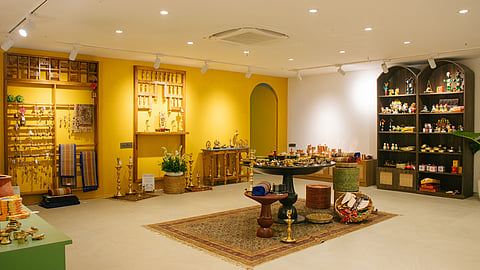
Today, Zishta founded by Meera Ramakrishnan, Archish Mathe Madhavan and Varishta Sampath works with over 650 artisans across 15 states, reviving more than 100 traditional crafts. As the brand celebrates its 10th anniversary in July, its Hyderabad flagship store in Banjara Hills has become more than a retail space. Designed as an experience centre, it allows visitors to explore the stories, science and significance behind India’s traditional materials and craftsmanship. In an interaction with Meera Ramakrishnan, co-founder of Zishta, she reflects on the brand’s journey and why preserving India’s living heritage is more relevant than ever.
Excerpts
What inspired you to start Zishta?
We realised India was losing not just traditional cookware and crafts but an entire way of living. Every region had utensils and household objects designed around its food, climate and culture. As modern materials replaced them, we were also losing the stories, knowledge and livelihoods associated with these crafts. Zishta was created to bridge India’s centuries-old wisdom with modern homes. We aren’t simply reviving products, we’re reviving the purpose and traditions behind them.

Zishta completes 10 years this July. Looking back, how has the journey been?
It has been deeply fulfilling because it has never been only about business. We started with nine artisans, three crafts and one state. Today, we work with over 650 artisans across 15 states, reviving more than 100 traditional crafts. The biggest achievement is seeing artisans build better lives. Families can now educate their children, create sustainable livelihoods and continue practising skills that might otherwise have disappeared. That’s the true meaning of celebrating 10 years.
Tell us more about the Hyderabad flagship store.
Our Hyderabad flagship isn’t a conventional retail outlet; it’s a knowledge and experience centre. Visitors don’t just shop, they discover why bronze was used for dining, why brass stored water, how different metals influence cooking and why handcrafted objects played such an important role in Indian homes. Every space has been designed to celebrate India’s craftsmanship while making it relevant for contemporary lifestyles. Hyderabad has responded warmly because people here appreciate authenticity and the stories behind what they bring home.
Why is preserving indigenous traditions so important?
These traditions represent generations of practical wisdom rather than nostalgia. Materials like cast iron, bronze, brass, clay and stone enhance flavour, distribute heat efficiently and, in some cases, contribute beneficial trace minerals. Traditional cookware was thoughtfully designed for taste, health and efficiency. Preserving these traditions means preserving knowledge systems that continue to remain relevant.
How do you identify crafts worth reviving?
We begin at the place of origin, where artisan families have practised the same craft for generations. We work with historians, researchers and local communities before spending time understanding the artisans’ processes and stories. Quality is equally important. Every product is tested in NABL-accredited laboratories, and we also seek feedback from people who have traditionally used these products. Finally, we document every craft so that the knowledge isn’t lost.
Has any traditional utensil particularly fascinated you?
The eeya chombu from Kumbakonam in Tamil Nadu continues to amaze me. It’s handcrafted entirely from pure tin and is traditionally used to prepare rasam, producing a flavour unlike any other vessel. I’m equally fascinated by Odisha’s bronze craftsmanship, where artisans shape vessels entirely through repeated heating and hand beating. It showcases extraordinary engineering skills that have been passed down for generations.
How has social media contributed to the revival of traditional homes?
Social media has transformed how younger generations view Indian traditions. People are rediscovering heirloom cookware, regional recipes and handcrafted products while proudly sharing family stories online. For us, it has become much more than a marketing tool. It helps document traditional knowledge, educate consumers and create pride in India’s heritage.
What has been your biggest learning as a founder?
Preservation cannot happen through emotion alone. Traditional crafts must remain relevant to modern lifestyles if they are to survive. We’ve also learnt that meaningful impact requires patience and trust. Working with artisan communities takes years, but when purpose and business grow together, both become stronger.
Which traditional item should every household own?
Iron cookware remains my personal favourite for dosas, chapatis and deep frying because of its excellent heat retention. Soapstone works beautifully for slow-cooked dishes, while an eeya chombu is unmatched for rasam. Bronze continues to be one of my favourites for both cooking and dining. Ultimately, every home can gradually bring back traditional cookware, dinnerware and handcrafted décor to create spaces rooted in health, sustainability and heritage.
What’s next for Zishta?
Our immediate focus is strengthening the artisan communities we already work with while expanding traditional product ranges. At the same time, we’re researching remarkable craft clusters in Odisha and Rajasthan. For us, revival isn’t about launching another product. It’s about preserving an entire ecosystem — supporting artisans, documenting knowledge and ensuring India’s living traditions continue to thrive for generations.