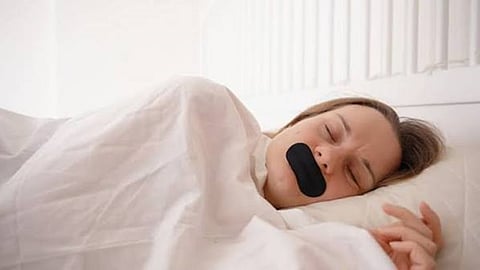

A small strip of tape placed over the lips before bed has become the latest sleep trend on social media, with many claiming it reduces snoring, improves sleep quality and even benefits oral health. Known as mouth taping, the practise is meant to encourage breathing through the nose instead of the mouth while sleeping. However, doctors say the trend warrants closer scrutiny because what works for a few people may not be safe or effective for everyone.
One of the biggest questions surrounding the trend is whether there is enough scientific evidence to support its growing popularity. Addressing this, Dr Venu Babu Pentyala, consultant root canal specialist at Anu’s Dental, says, “Current scientific evidence supporting mouth taping is limited. While a few small studies suggest it may reduce snoring in selected people with mild sleep-disordered breathing, there is no strong evidence that it improves oral health. It should not be viewed as a universal solution and should only be considered after medical evaluation.”
Researchers have also been examining whether the practice is actually effective for improving sleep. Sharing what current studies indicate, Dr V Nagarjuna Maturu, senior consultant and clinical director, clinical and interventional pulmonology at Yashoda Hospitals, shares, “A recent 2025 scoping review identified only a small number of studies, many of which were of modest quality and involved carefully selected patients. While some studies have reported improvements in snoring and mild obstructive sleep apnea (OSA), the findings are inconsistent and insufficient to recommend mouth taping as a standard treatment. At present, it should be viewed as an experimental adjunct rather than an evidence-based therapy.”
Many people do not realise how breathing through the mouth night after night can affect their teeth and gums. Explaining its impact on oral health, Dr Venu expresses, “Chronic mouth breathing dries the mouth, reducing saliva that naturally protects teeth and gums. This increases the risk of cavities, gum disease, bad breath, enamel erosion, oral infections, and gum inflammation. In children, prolonged mouth breathing may also affect jaw growth, facial development, and tooth alignment.”
Explaining the common medical reasons behind it and when it should be checked, Dr Nagarjuna narrates, “Mouth breathing during sleep is usually a symptom rather than the problem itself. Common causes include nasal blockage due to allergies, sinus disease, a deviated nasal septum, enlarged adenoids, and obstructive sleep apnea. Persistent mouth breathing accompanied by loud snoring, witnessed pauses in breathing, excessive daytime sleepiness, morning headaches, dry mouth, or poor-quality sleep should prompt evaluation by a physician or sleep specialist. Identifying and treating the underlying cause is far more important than simply preventing mouth breathing.”
The practice can also become risky for people with certain breathing conditions. Speaking about who may face complications, Dr Nagarjuna acknowledges, “Mouth taping may pose risks in individuals with undiagnosed obstructive sleep apnea, asthma, COPD or significant nasal obstruction. During sleep, if nasal airflow becomes inadequate, the mouth serves as an important alternative route for breathing. Sealing the mouth may increase breathing difficulty, worsen oxygen deprivation and delay the diagnosis of underlying sleep disorders. For patients with chronic respiratory diseases, this could potentially aggravate symptoms and compromise breathing during sleep.”
There are also groups of people who should avoid trying the trend without professional advice. Highlighting this, Dr Venu notes, “People with nasal obstruction, sleep apnea, breathing disorders, severe allergies, TMJ problems, orthodontic appliances, anxiety, or anyone unable to breathe comfortably through the nose should avoid mouth taping unless advised by a healthcare professional.”
Instead of following viral hacks, doctors recommend finding out why mouth breathing or snoring is happening in the first place. Whether it is allergies, nasal blockage, poor oral hygiene or an undiagnosed sleep disorder, getting the right diagnosis and treatment is a far safer path than relying on a strip of tape before bedtime.
