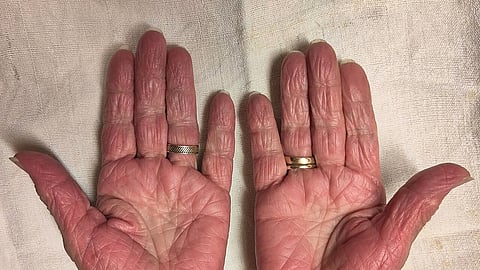

Red palms, medically known as Palmar Erythema, may seem like a harmless change in skin colour, something that is easy to notice and just as easy to ignore. This painless redness can sometimes be a normal occurrence. However, when it persists or appears alongside other changes in the body, it can offer an important clue about underlying health concerns, including chronic liver disease. Red palms are one of the visible signs associated with liver disease, but their presence alone does not confirm advanced liver damage. Explaining this, Dr TLVD Prasad Babu, HOD - department of surgical gastroenterology at Yashoda Hospitals, says, “Although persistent reddening of the palms, or Palmar Erythema, is a known symptom of liver disease, it is not unique to the liver and does not always indicate advanced damage. Impaired hepatic metabolism in chronic liver disease changes the levels of hormones and vasoactive substances (such as increased circulating estrogen and vasodilators), which results in visible redness and dilatation of the superficial palmar vessels. Palmar erythema is frequently associated with cirrhosis. However, other systemic conditions or earlier stages of the disease may also cause it.”
Knowing when this redness moves beyond a normal skin change is equally important. “It can occur normally during pregnancy or on others. However, if it appears suddenly, persists, or is accompanied by fatigue, jaundice, or swelling, it may indicate liver disease or another underlying medical condition,” explains Dr Syamala Aiyangar, consultant internal medicine at Apollo Hospitals, Hyderguda. When it comes to the liver conditions commonly associated with red palms, the symptoms can appear at different stages. “Palmar Erythema is most frequently associated with viral hepatitis with chronicity, alcoholic and non-alcoholic chronic liver disease, and established cirrhosis from various causes. But it can also happen during pregnancy, with thyroid issues, rheumatoid arthritis, and some vascular or dermatological conditions. The onset of red palms varies; some patients experience them early in the course of chronic inflammatory liver disease, while others only exhibit them when portal hypertension and cirrhosis are present,” says Dr Prasad Babu.
Once liver disease is diagnosed, the possibility of improvement depends largely on its severity and remaining liver function. “Palmar Erythema may improve with effective treatment if an underlying liver disorder is found; however, reversal depends on the stage of the disease and residual liver function. The goal of management is to treat the underlying cause (antiviral therapy for hepatitis, support and cessation of alcohol, lifestyle and metabolic control for NAFLD, autoimmune-directed therapy when necessary), as well as any cirrhosis complications that may arise,” notes Dr Prasad Babu. Finding that underlying cause begins with a wider look at a person’s health rather than the palms alone. “We begin with a detailed medical history and physical examination. Blood tests, including liver function, thyroid profile, blood sugar, and autoimmune markers, are commonly advised. Depending on findings, ultrasound, FibroScan, or other imaging studies may be recommended to evaluate liver health and related conditions,” concludes Dr Syamala. Red palms, therefore, are better viewed as a signal worth understanding rather than a diagnosis in themselves. Maintaining a healthy weight, eating a balanced diet, limiting alcohol, exercising regularly, controlling diabetes, and attending regular health check-ups can help protect liver health. Most importantly, persistent changes should not be ignored, as timely evaluation can identify the cause early and reduce the risk of serious complications.
