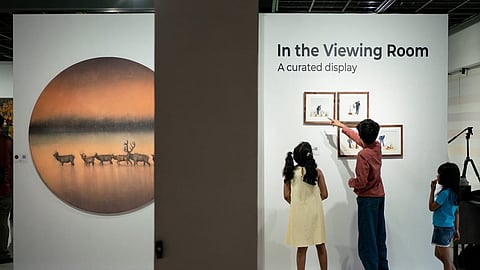

Walk into Kalakriti Art Gallery and the first thing that strikes you is that no two works seem to be speaking the same language, yet somehow they are part of the same conversation. In the Viewing Room brings together 15 artists from across disciplines, with bronze sculptures, rosewood inlay works, layered landscapes and contemporary paintings sharing the same space. Rather than following a rigid theme, the exhibition unfolds like a series of encounters, where each artwork offers a different way of looking at memory, movement, heritage and the world around us. Conceptualised and curated collectively by the Kalakriti Gallery team, the exhibition invites visitors to slow down, wander between perspectives and discover unexpected connections of their own. On view until August 18, it offers a glimpse into the many directions contemporary art is taking today.

Dimpy Menon:
The premise of all my bronze works, cast in the lost wax process, is to capture the brilliance of movement in a split second of joyful expression. The human form is both my inspiration and metaphor, rooted in positivity. Though the process is arduous and back-breaking at times, I never let that show.
Kullu Ojha:
My work is titled Line, Space and Layer, and these three elements are used metaphorically throughout the piece. I wanted to bring Islamic and Hindu architecture together within a single frame, drawing inspiration from the stories of conflict I heard growing up. However, I never approached it from a political perspective. I see myself as a witness, reflecting on the beauty that continues to exist in monuments such as the Qutb Minar and Mughal-era architecture. Creating each work is a gradual process that can take anywhere from one to two months.
Jignesh Panchal:
This series emerged from my long-standing interest in how landscapes can function as psychological spaces rather than literal representations of nature. The idea developed gradually through observation, reflection, and experimentation, leading to an interest in the colour blue, not simply as a colour, but as a structural element capable of shaping space, memory, and emotion. I wanted to create environments that feel familiar yet imagined, where architecture, water, sky, and landscape merge into contemplative spaces. At its core, the series explores the relationship between inner and outer landscapes, inviting viewers to bring their own experiences into the encounter.
Bhanuprakash Ram:
My inspiration comes from India’s living heritage — its mythology, architecture, nature, craftsmanship, and the stories that continue to shape our collective memory. Through Mysore Inlay, I wanted to bring traditional craft into a contemporary artistic language, creating works that feel rooted in history yet speak to today’s audience. The idea for this series emerged from a desire to preserve and reimagine a heritage art form with immense cultural depth. Each artwork began as a visual story and was translated into layers of wood, veneer, texture, and detail. At the heart of the work is the belief that heritage is alive, relevant, and capable of evolving, encouraging viewers to rediscover India’s cultural and artistic legacy through a new lens.