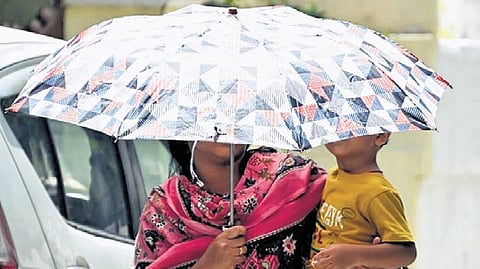

HYDERABAD: Hyderabad and several districts across Telangana could face a growing public health challenge from extreme heat, according to a new study that suggests heatwaves may be causing far more deaths across India than official records indicate.
Published in Frontiers in Environmental Health, the study presents the first nationwide district-level assessment of heatwave-induced excess mortality in India. Researchers estimate that a single day of extreme heat could trigger nearly 3,400 additional deaths nationwide, while a five-day heatwave may result in close to 30,000 excess deaths.
The findings carry particular significance for Telangana, as Hyderabad was one of only 10 Indian cities used as a benchmark for estimating heatwave-related mortality across climatically similar districts.
Researchers found that districts grouped under Hyderabad’s climate cluster on the Deccan Plateau displayed mortality patterns comparable to other highly vulnerable regions of the country. Hyderabad served as a representative city for dozens of districts with similar climate and elevation characteristics, helping researchers estimate how extreme temperatures translate into increased mortality risks.
A sensitivity analysis showed that reassigning districts between the Hyderabad and Pune climate clusters altered national mortality estimates by less than 0.1%, highlighting Hyderabad’s robustness as a climate reference point. The adjustment affected 53 districts, mainly in Telangana and Maharashtra.
The study argues that actual heat-related deaths are likely much higher than official figures because many fatalities linked to extreme temperatures are recorded under cardiovascular, respiratory or other medical causes rather than as heatstroke.
Researchers warn that recurring heatwaves, rapid urbanisation, population growth and limited access to cooling infrastructure could further increase vulnerability across Telangana. They note that only about 8% of India’s population currently has access to air conditioning.
Public health experts also point to Hyderabad’s expanding urban heat island effect, where dense construction, roads and shrinking green cover trap heat and keep night-time temperatures elevated, reducing the body’s ability to recover from daytime heat stress.
