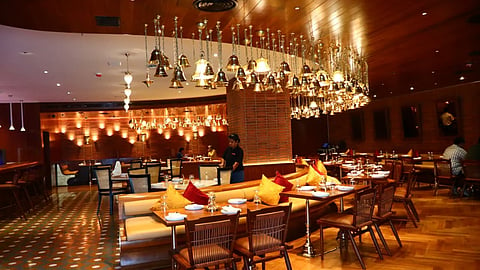

For a city that takes immense pride in its food, Hyderabad has no shortage of restaurants celebrating regional cuisine. Yet few have approached the task with the depth of research and storytelling that defines Oota. After building a loyal following in Bengaluru for its thoughtful exploration of Karnataka’s culinary traditions, the restaurant has now arrived in Hitec City with a menu dedicated entirely to the diverse food cultures of Andhra Pradesh and Telangana.
Designed by Shibanee+Kamal Architects and operated by Total Environment Hospitality, Oota Hyderabad goes beyond presenting familiar regional favourites. The restaurant seeks to document and preserve culinary traditions that have evolved across generations, bringing together recipes, ingredients, and techniques that are deeply rooted in the everyday lives of the people who created them.
The journey to create the menu was as ambitious as the vision itself. Over two years, Oota’s culinary team travelled more than 3,600 km across Andhra Pradesh and Telangana, cooking over 500 dishes while learning from home cooks, small eateries, local bars, heritage hotels, and food historians. What emerged from this extensive exploration is a menu that reflects the many layers of the Deccan’s culinary identity — from royal Nizami influences and coastal seafood traditions to the robust flavours of Rayalaseema and the comforting dishes of Telangana households.

The experience begins with a selection of starters that showcase the region’s diversity. The Mamidikaya Bajji Mixture transforms the humble raw mango fritter into a vibrant dish layered with mint chutney, sev, and crunchy mixture. The Munagaaku Siridhanyaala Pakoda, made with mixed millet flour, drumstick leaves, and nuts, offers a nutty texture and earthy flavour that highlights the growing appreciation for traditional grains.
Among the non-vegetarian offerings, the Pathar Ka Gosht is undoubtedly a standout. Cooked in the traditional Hyderabadi style, the meat arrives beautifully tender, packed with flavour and boasting a melt-in-the-mouth texture. Equally satisfying is the Mutton Lukhmi, where crisp pastry encases a delicately spiced minced mutton filling, making for a classic that remains timeless.
The mains continue the narrative of regional discovery. Dishes such as Haleem-e-Khaas, Mudda Pappu with Pachi Pulusu, and Zafrani Kacche Gosht Biryani stay true to their origins while benefiting from precise execution and quality ingredients. Rather than reinventing these classics, Oota focuses on presenting them with authenticity and respect.
Desserts celebrate some of the region’s most cherished sweet traditions. The rich Bandar Halwa from Machilipatnam, the paper-thin delicacy of Putharekulu from Atreyapuram, and the comforting sweetness of Hyderabadi Sheer Khurma provide a fitting conclusion to the meal.
The beverage programme is equally rooted in local inspiration. Cocktails such as the Guntur Old Fashioned, infused with Guntur red chilli, and the Gongura Highball, inspired by Telangana’s iconic sour leaf, reinterpret regional ingredients in contemporary ways. Khubani ki Mehfil pays tribute to the beloved apricot-based dessert that has long been associated with Hyderabad’s royal kitchens.
“Hyderabad felt like a natural progression for Oota. After our journey through Karnataka, we wanted to explore a region with an equally deep and layered culinary tradition. Andhra Pradesh and Telangana offered exactly that. This was never about entering a new city, it was about spending time with a region whose food culture is shaped by history, geography, and community,” says Kamal Sagar, founder of Total Environment Hospitality.
The same philosophy extends to the restaurant’s design. Warm wood, exposed brick, and brass accents create an understated setting that allows the food and conversations to take centre stage. “We wanted the space to feel familiar and welcoming. The design had to support the experience quietly rather than compete with it,” adds Kamal.
One dish that particularly resonates with him is Haleem-e-Khaas. While modern interpretations of haleem have become increasingly varied, Oota returns to its earlier form as a slow-cooked preparation of whole wheat and meat. “There’s a depth and honesty to it that reflects the way food here has always been approached,” he explains.
At a time when regional Indian cuisine is enjoying renewed attention, Oota Hyderabad offers something more meaningful than nostalgia. It presents a carefully researched and thoughtfully executed exploration of Andhra and Telangana’s culinary heritage, inviting diners to experience the stories, traditions, and flavours that continue to shape the region’s food culture.