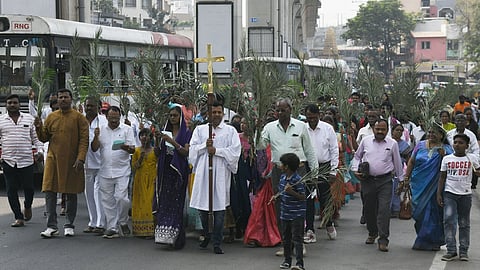

Palm Sunday falls within Lent, the 40-day period regarded as the most sacred time in the Christian calendar. A season typically marked by reflection, restraint, and remembrance of sacrifice, Lent is not often associated with celebration. Which is what makes Palm Sunday intriguing. As March 29 is observed as Palm Sunday this year, CE explores the meaning behind the day and the significance of the processions seen across churches.
CE speaks to Rev Dr James Cecli Victor, Presbyter-in-charge of CSI Christ Church, Lallaguda English Pastorate, who sheds light on the occasion and the days leading up to Good Friday and Easter. Explaining the essence of Palm Sunday, he says, “Palm Sunday commemorates Jesus’ triumphal entry into Jerusalem, a unique moment in His life. Until then, He was recognised by some as the Messiah — the anointed one — while many saw Him as a teacher or a prophet. This was the first time He was openly acclaimed as a king. The title ‘Son of David’ was used, a title reserved for the anointed one, marking both recognition and the fulfilment of prophecy.”
He continues, “It was foretold that He would ride on a colt and enter Jerusalem, be worshipped by people, and that prophecy was fulfilled. But the story does not end there. It was also a quiet resistance to the dominant powers of the time. Under Roman rule, people were made to believe that peace and prosperity came only through the empire — what was called Pax Romana. In contrast, Jesus’ entry on a colt, without swords or soldiers, presented a very different image of kingship.”
Despite Lent being a period of austerity, Palm Sunday introduces a shift in tone. He explains, “It transforms the mood of believers — from seeing Jesus as a victim to recognising Him as triumphant. It shifts the focus from sorrow to acknowledgement of Him as the king of the universe, who bore the weight of human sin. It prepares us spiritually for the Holy Week, Good Friday and ultimately Easter.”
Speaking about Holy Week, he adds, “Holy Week marks the final phase of Jesus’ earthly ministry leading to His crucifixion and resurrection. Each day holds deep significance, as it reflects what Jesus did, fully aware of the suffering that awaited Him.”
He elaborates on the progression of the week: “On Monday, the cursing of the fig tree is not about anger but a lesson against hypocrisy and a call to faith. Jesus teaches that with faith, even the impossible can happen. The following days focus on how He faced questions and opposition — each response offering wisdom and moral direction. Each event leads meaningfully towards Good Friday. It is a powerful sequence — one that shows how everything culminates in His sacrifice. Saturday is observed as Silent Saturday — a day of waiting, prayer, and reflection — before the joy of Easter.”
