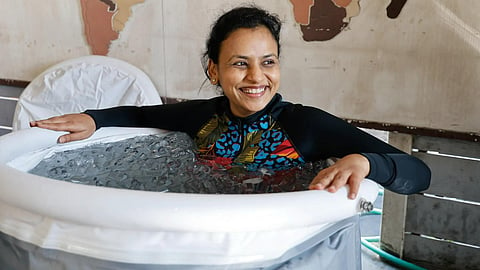

On a summer morning in Hyderabad, while most people are still having their sleepy conversations with a cup of coffee, a group of strangers step toward tubs filled with ice water. Some stand there laughing nervously, others dipping their fingers and pulling their hands back, while some, confused: ‘How are we supposed to get into that?’
As one gets in, something changes. Breathing slows. Shoulders loosen. The panic turns into surprise. And somewhere between the cold shock and the steady coaching around them, people begin letting go of things they did not realise they were carrying.

That is the space Ekaagr has been trying to create through its guided ice plunge experiences. Started by psychotherapist and counselling psychologist Aanchal Munoth, along with counselling psychologists Yashi Sonthalia and Shehre Bano Ahmed, the initiative has slowly grown into a community focused on slowing down and reconnecting with the body.
Even the name came unexpectedly. “It involved many conversations with families and friends, asking for names that felt meaningful. During a random airport conversation after their Chennai plunge, Ekaagr came up and instantly clicked,” Aanchal shared.
Unlike the internet’s fast-paced version of ice baths that often focuses on pushing limits, Ekaagr’s sessions move differently. Before anyone enters the tub, participants spend time grounding themselves through breathwork, body awareness, and body acclimatisation exercises. “We wanted the experience to reflect what we do as therapists and focus on slowing down and checking in with your body. That led us to the idea that the body is a house of wisdom rather than symptoms, which is deeply connected with all three of us. We wanted the experience to honour bodily and emotional responses. The acclimatisation activity was intentional because it slowly introduces the body to the shock, familiarising it with the sensation before entering the plunge and helping it feel less unfamiliar,” Yashi explained.
The trio’s psychology background naturally shaped the experience. Consent forms, emotional safety, and gradual exposure became central to every session. “You’re putting your body through something intense, so safety matters in every sense,” Aanchal said.
Architect Kolan Rupesh Reddy remembers his first plunge as unexpectedly emotional. “When I did my first ice plunge, it was really overwhelming, and I had an emotional breakdown I didn’t expect. In that moment, something changed, and I felt a huge release from all the stress and weight I had been carrying. I felt light, and the experience gave me a completely new perspective. The team, especially Aanchal, Yashi, and Shehre Bano, were kind and supportive, which made the first day easier. After three sessions, every plunge feels like a fresh start because it helps me stay calm, clear my mind, and reset,” he recalls.
Speaking about the emotional, mental, and physical impact of ice plunges, Shehre explained how the experience helps people reconnect with their bodies and emotions. “We’ve seen ourselves, our loved ones, and people we’ve done this with experience this, and that has reinforced our belief that, at the baseline, you walk away with trust and appreciation for your body. Knowing you survived in that temperature creates a sense of achievement and awe. In today’s life, where we are constantly disconnected from our bodies and pushing through hustle, this helps you slow down and realise how much your body does for you. People also speak about mental clarity, emotional release, and feeling deeply present while realising their emotional and physical strength,” Shehre shared.