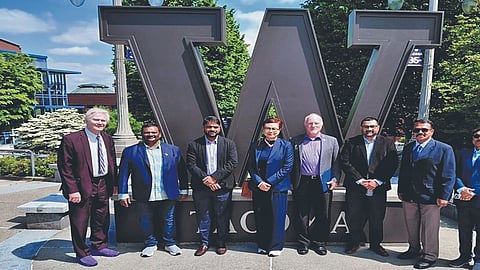

When Dr Kishore Gopinathan, vice chancellor of Young India Physical Education and Sports University (YIPESU), participated in the prestigious International Visitor Leadership Programme (IVLP) organised by the United States Department of State, it was far more than an academic exchange. Centred around the theme ‘American Sports Enterprise and Olympic Markets: The Telangana Opportunity’, the programme offered a close look at how one of the world’s most successful sporting ecosystems has evolved through institutions, community participation, education, and long-term vision.
For Dr Kishore, the experience arrives at a crucial moment as the YIPESU works toward becoming a future-ready institution focused on sports education, athlete development, research, and innovation. The visit opened up opportunities to study global best practices in sports governance, Olympic ecosystems, high-performance athlete development, and institutional collaboration — lessons that could help shape the future of sport in Telangana.
Throughout the programme, the delegation interacted with universities, sports organisations, civic institutions, and public agencies across the United States. These engagements revealed how deeply sport is integrated into American society — not merely as entertainment or elite competition, but as a structured ecosystem supported by education, communities, and local institutions.
For Dr Kishore, one of the most compelling takeaways was the role universities play in nurturing sporting excellence. One of the key reflections from the American experience is the need to integrate sport more meaningfully into mainstream education. Schools, colleges, and universities can become stronger platforms for talent identification, sports science research, innovation, and athlete development. Sport, in this context, moves beyond competition and becomes part of holistic education.
Fields such as biomechanics, sports psychology, analytics, wellness sciences, physiotherapy, and sports management offer enormous interdisciplinary opportunities. Integrating these into educational systems can strengthen sporting culture while also creating awareness around the many professional pathways within the sports industry.
Ultimately, the visit reinforced a powerful lesson: sustainable sporting excellence is built over time through institutional commitment, cultural integration, and widespread participation. As India moves toward its future sporting ambitions, there is immense potential to unlock the country’s vast youth population by creating stronger connections between sport, education, and community life.
