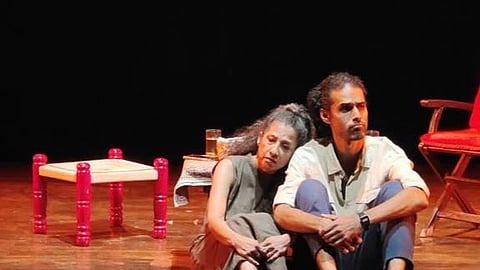

A garden does not grow the same way for everyone. Some nurture it with intention, some inherit it without ever questioning why, while others discover that life has plans of its own. The idea of nurturing takes on a different meaning in How Does Your Garden Grow?, an original play by Pallavi Verma that explores a question many people encounter at some point in their lives: do we want children, and why?
The play follows eight individuals whose experiences of parenthood are shaped by desire, social expectations, personal choices and circumstances beyond their control. For her, the idea was rooted in the lives unfolding around her.
“I thought, why am I not telling this story? Because this is what is affecting my friends, my contemporaries and my peers,” says Pallavi, who created, directed and designed the production.
The play began taking shape after she and her theatre group explored staging The Vagina Monologues. When they could not proceed with the project, their conversations continued, eventually leading them towards an original story. Over time, she began exploring different experiences of parenthood — from those who have children because they genuinely want to, to those who feel expected to, and those whose circumstances take the decision out of their hands.
“In the category of people who choose not to have children, some are really conscious about it and have a reason for not choosing. Some are not choosing or having children because life has just thrown a curveball at them,” she explains.
The current version has eight story arcs, revised over two years from an earlier production that featured 11. Rather than presenting eight isolated lives, she connects them through a relay-like structure, with characters moving from one encounter to another.
“The challenge was to be able to complete each character’s arc and still retain this particular structure that I had chosen, while making each interaction as meaningful and contributory to the story as possible,” she says.
What surprised her most was how easily people recognised themselves in the script. The response from actors and others who encountered the play strengthened her conviction that these stories needed to be told.
Her exploration also draws on the concept of generativity, associated with psychologist Erik Erikson’s work on how people contribute to future generations and the world around them. For her, nurturing need not be confined to parenthood.
“My attempt at this play is actually an artistic enquiry based on his research. Where he ended is where I began my enquiry,” she says, describing the production as a meeting point between art and anthropology.
Ultimately, she hopes audiences will find something of themselves in these eight lives. “Anybody watching will be able to see a part of their life up close. They would be able to relate to at least one of the characters,” she concludes.
