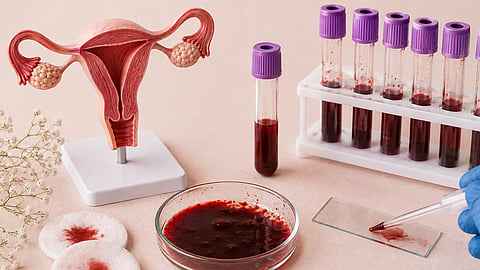

Period blood is often spoken about only in terms of what the body sheds each month. But growing research is looking at it differently, exploring whether this menstrual fluid could offer clues about tissue repair and even future medical treatments. While some studies suggest that components in period blood may support healing, doctors caution that this does not mean menstrual blood can be directly used on wounds.
The first distinction lies in what menstrual blood actually contains. “Menstrual blood is not simply blood. It is a mixture of blood, shed endometrial tissue, cervical mucus, vaginal secretions, immune cells, proteins, DNA, RNA and extracellular vesicles. Compared with venous blood, it has different protein and cellular profiles,” says Dr Antharvedi Santhi, consultant obstetrics and gynaecologist at Apollo Hospitals, Hyderguda.
The fluid also carries substances that have attracted the attention of researchers studying regeneration. “Growth factors such as VEGF (Vascular Endothelial Growth Factor), PDGF (Platelet-Derived Growth Factor), EGF (Epidermal Growth Factor) and TGF-Beta (Transforming Growth Factor Beta) are key drivers of new blood vessel formation and tissue remodelling. Cytokines and chemokines, including interleukins like IL-6 (Interleukin-6) and IL-8 (Interleukin-8), modulate inflammation,” shares Dr Shailesh R Singi, senior consultant haematologist and BMT physician at Renova Century Hospital.
Laboratory research has offered some early clues about how these components could contribute to wound closure. “Laboratory and animal studies suggest menstrual fluid contains factors that can promote epithelial cell migration, an important step in wound closure. However, this does not mean menstrual blood itself is a proven wound-healing treatment,” expresses Dr Antharvedi.
Some of the most interesting research focuses on cells found in menstrual fluid. “The unique proteins of menstrual blood have the potential to serve as biomarkers for various disorders, including endometriosis and chlamydia. Recent research suggests that menstrual blood can estimate serum levels of eight biomarkers, including HbA1c, cholesterol, creatinine, high-sensitivity C-Reactive Protein (hsCRP), Low-Density Lipoprotein (LDL), Triglycerides, High-Density Lipoprotein (HDL), and Follicle-Stimulating Hormone (FSH), helping in the early diagnosis of diabetes, cervical cancer, endometriosis, and others,” highlights Dr Shailesh.
There are also practical concerns that researchers must address before these findings can move into hospitals. “Presently, we have only lab and animal data with no clinical application. A few pre-clinical studies have applied menstrual blood-derived products or menstrual stem cell conditioned media to skin wounds in mice, showing faster wound closure, better angiogenesis, and less inflammation compared to controls,” reflects Dr Shailesh.
The research, nevertheless, could open several avenues in medicine. “Researchers are studying menstrual fluid and its cells, proteins, and extracellular vesicles for regenerative medicine, diagnostics, and potentially therapies for poorly healing tissues. Its easy, non-invasive collection makes it attractive for research. However, practical treatments require extensive testing for effectiveness, safety, dosage and standardisation,” narrates Dr Antharvedi.
Scientists are also exploring applications beyond wound healing. “MenSCs (Menstrual blood-derived stromal/stem cells) have demonstrated encouraging therapeutic effects across preclinical and emerging clinical studies. Their ability to promote angiogenesis, modulate immune responses, and enhance tissue regeneration makes them promising candidates for future stem cell-based interventions,” notes Dr Shailesh.
For now, the science points to potential rather than a ready-to-use remedy. Period blood may hold valuable biological clues, but claims that it can directly heal wounds go far beyond what current human evidence can establish.
