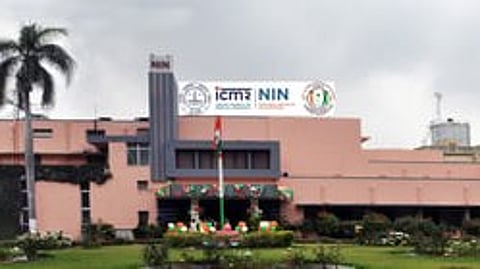

HYDERABAD: Researchers at the ICMR-National Institute of Nutrition (ICMR-NIN) have found that Vitamin D3 was more effective than Vitamin D2 in maintaining and restoring skeletal muscle and heart function during and after vitamin D deficiency in an animal study.
The study, published in Molecular Nutrition & Food Research, compared Vitamin D2, Vitamin D3 and a combination of both for their effects on skeletal muscle structure and metabolism, muscle strength and cardiac function. It was titled “Dietary Vitamin D2 Is Less Potent Than Vitamin D3 at Maintaining or Restoring Structure and Metabolism of Skeletal Muscle and Heart in Male Rats.”
While vitamin D is best known for its role in calcium regulation and bone health, it also contributes to skeletal muscle and heart function. However, evidence comparing D2 and D3 in these areas has been limited.
Researchers used weanling male Sprague-Dawley rats, feeding them diets containing Vitamin D2, Vitamin D3, a combination of both or no vitamin D. They assessed body composition, muscle strength, muscle fibre structure and metabolism, along with markers associated with cardiac function.
Rats receiving Vitamin D3 showed greater improvements in muscle mass, muscle fibre size and grip strength. D3 also performed better in improving markers associated with muscle development and energy metabolism.
Similar differences were observed in the heart, with Vitamin D3 producing stronger improvements in markers of cardiac contractility and metabolism, particularly during recovery from vitamin D deficiency.
Dr Ayesha Ismail, scientist F at ICMR-NIN and corresponding author, said both forms improved calcium-related parameters, but D2 was less effective in several measures related to muscle and heart structure and energy metabolism.
ICMR-NIN director Dr Bharati Kulkarni said the findings indicated potential advantages of Vitamin D3 in supporting skeletal and cardiac functions, but stressed that further research was needed.
