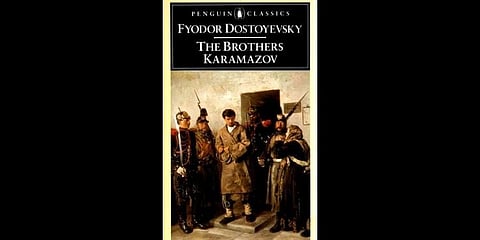

KOCHI: Be it human suffering, questions of morality and faith or the tenderness of love — Fydor Dostoevsky’s views and philosophy are complex. After escaping a death sentence by a play of fate, he spent around four years in the prison camps of Siberia for his involvement in the Petrashevsky Circle. It’s this time spent among peasants, criminals and thieves that changed his life and beliefs and made him the writer he came to be known for -- a writer containing multitudes within.
His final offering, The Brothers Karamazov — Dostoyevsky’s last novel before his death in 1891 — is one of the greatest ever written. Thousands of pages filled with deep philosophical questions that appeal to everyone irrespective of age and time, placed in the backdrop of a patricide. The brothers Dimitri or Mitya, Ivan or Vanya and Alyosha have nothing in common except a dissolute father and their wish to murder him.
The eldest and the favourite of the investigation, Dimitri, is a slave to his baser urges and fights his father for the affections of Grushenka, a sex worker they are both in love with. Ivan is an atheist — a rationalist set in his beliefs. The youngest, Alyoshya, is a believer and the most compassionate soul one could ever encounter. His purity and devotion sometimes become off-putting. But, at the same time, his melancholy and bleeding heart makes one wish for a miracle and not the comedy that ensues. In Aloyshya’s faith, when a pure priest, one like his mentor Father Zosima dies, the body doesn’t rot. But the stink that rises from Zosima’s corpse saddens him, a turning point in his life. But it’s Ivan’s brooding belief and sermons on “the force of the Karamazov baseness” that kindled the fire that drives the book.
The non-linear narrative requires all the attention of the reader. It’s not difficult to pay attention to it, however. In its vast expanse, the book contains multitudes of characters, each going through their own battles for survival.
In one of the most famous chapters ‘Rebellion’, Ivan and Alyosha passionately discuss if god exists. “The whole world of knowledge is not worth the tears of that little child to ‘dear God’. I’m not talking about the suffering of grownups, they ate the apple and to hell with them, let the devil take them all, but these little ones!” argues Ivan of the injustice of it all, if God exists. How can anyone justify the suffering and death of children?
It’s not just fiction. It’s something visceral, universal. A timeless account of a dysfunctional family, and people caught within. No one is perfect, everyone falls prey to the primitive urges that make them human. With passionate conversations and tender love and compassion that exists behind the central plot, ‘The Karamazov Brothers’ stands apart from its contemporaries. “What is hell? I maintain that it is the suffering of being unable to love.” Fyodor Dostoevsky, The Brothers Karamazov
