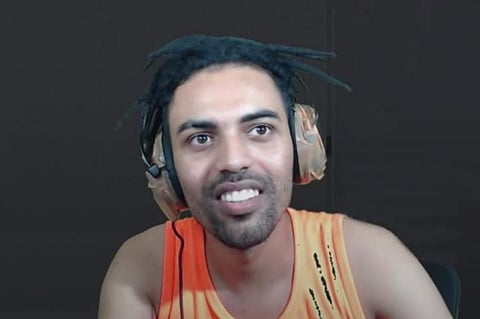

KOCHI: Who is this Thoppi? This has been a burning question in Kerala over the past few days. A gamer-turned-YouTuber, Mohamed Nihad aka ‘Mrz Thoppi’ became news when he arrived in Valanchery to inaugurate a garment store. There was a hubbub and a traffic block.
What shocked many was the number of children who thronged the venue to catch a glimpse of Thoppi. It came to light that most of his fans were school-going children. Thoppi’s videos are often explicit, misogynistic, and homophobic. They are laden with abuses. These are said to be qualities that hooked many children. They apparently were excited by Thoppi’s nonconformism and admired him as some sort of a rebel.
The 26-year-old never leaves his room due to “social anxiety”. He spends most of his time online, playing games such as PUBG. After the public event at Valanchery in Malappuram, where he crooned a flippant song with words like ‘fart’, things took an ugly turn for Thoppi. On Thursday, the local police officers arrested him on a complaint filed by a trauma care volunteer.
The arrest, too, went viral as Thoppi live-streamed it. Officers had to break into his house at 2 am, as he refused to open the door. Currently, he faces charges of obstructing traffic and posting obscene content online. “We had to break down the door to prevent him from destroying evidence,” says Valanchery Station House Officer Abdul Jaleel. “We needed his system, hard disk, etc. We received a complaint, so we have to investigate.”

While the law takes its course, this case serves as an indicator of a parallel online world the upcoming generation is exposed to. Like a digital netherworld. “Especially after Covid-19, the world has changed. Digital is part of our life,” says Anoop John, a teacher at Ramamangalam High School in Ernakulam. “Almost all children have access to gadgets, social media, and other content. Now we are learning about the dark side of that.”
Arnoop adds he had sent five children from his school for counselling as they were found to be addicted to gadgets. “The issue is beyond excessive use of gadgets. Some emulate and behave like Thoppi in their day-to-day life,” he says. “They find this guy ‘cool’, a hero. Now, with the arrest, he is a hero. Many students across Kerala put up social media and WhatsApp statuses proclaiming solidarity with Thoppi.”
Anoop stresses that society should take a close look at the effect ‘influencers’ like Thoppi have on children. He points to a vlogger duo who had challenged the Motor Vehicle Department with their modified vehicle. “You have heard about the E Bull Jet, right? They also were popular among students,” he adds.
Dinta Suresh, a sexuality educator, says children were attracted to Thoppi’s videos due to his gaming content. “His fans are mostly boys,” she notes. “They would not realise the content is derogatory. The elders use similar abusive words, display misogyny, etc. Even our politicians say demeaning things about women in speeches. That makes the roles of parents and teachers critical.”
‘Limit screen time for children’
According to Dr Arun B Nair, professor and psychiatrist at Thiruvananthapuram Medical College, children tend to observe, internalise, imitate and impersonate adult behaviour. “It starts at the age of three,” he notes.
“Critical thinking develops around the age of 12. So children between these ages are especially vulnerable to getting influenced.” Arun adds that such children may get the tag of ‘problem child’. “Later, they will become isolated from peers and teachers due to this behaviour,” he says.
Parental monitoring is a must, insists Arun. ”There are apps that help avoid problematic content. The second step is restricting screen time,” he adds. “Minors should be allowed to access gadgets only in spaces such as the living room. Instead of tablet or smart phone, provide them with laptops or desktops. ”
‘Need regulation’
Though parental supervision is the best solution, the reality is different, points out Dinta.
“Most parents are not aware of how to use even apps. Usually, it is the children who teach them,” she says. “It will be difficult for many to supervise their children. That is why systematic regulation is important.”
‘Negative sells’
Content creator Balram Menon, known for his food and travel vlogs, agrees with Dinta. “People seem to love negativity. That’s what popularity of content creators like Thoppi indicates. Explicit content, cuss words and sexism garner more viewer engagement,” he says.
Echoing Dinta’s views, Balram says stringent regulations are the need of the hour. “Do children have easy access to adult films, no. Why? Because there are rules. The same should be applicable in content creation, too,” he says.
The first step, he adds, will be to tax content creators. “Yes, we need to pay the tax. It will help genuine content creators stand out,” he says.
Soumiya Ruth, a digital creator on Instagram, also believes the existing regulations are ineffective when it comes to objectionable pages and content. “I have noticed that it is difficult to get prompt responses while flagging improper Malayalam content,” she says.
“There are many Insta pages that make vulgar videos and images of actresses and models. Despite reporting them multiple times, nothing happens. ”
‘Discriminatory action’
Soumiya says such quick police action seemed excessive in Thoppi’s case. “He is a young person without any political clout or standing in society,” she says. “However, our politicians and many actors are charged with heinous crimes. They are never arrested or subjected to the same treatment.”
Notably, Muralee Thummarukudy, UN environmental crisis expert and social observer, wrote on Facebook two days ago about a “parallel world” that many in the older generation have been unaware of.
“As per the uncles (people from the older generation), such a parallel world is a wrong path... In the case of Thoppi, instead of arresting him, his actions and his childhood issues suggest the necessity of intervention by psychiatrists,” he argued.
Thoppi has spoken about his strained relationship with his family. According to him, his father is conservative and strict, and that had created a rift between them since Thoppi was young. Many consider this to be a reason for Thoppi’s “social anxiety”.
Writer and special secretary at SC, ST and OBC development department Prasanth Nair also calls for a sensitive approach. “Our society loves bans and arrests,” he says. “We haven’t yet learnt to be sensitive towards people struggling with mental health issues. We have always been a society that mocks such people and stone them.”
Prasanth points to freedom of expression as well. “Our Constitution gives us the right to offend. Thoppi’s contents are for adult audiences. If children are watching it, the parents are to be blamed,” he says. According to cyber security analyst Nanda Kishore, India needs an effective body to regulate the digital space. “It has been years since Digital India was launched. But even now, we are way behind when it comes to regulations,” he says.
“We start looking for solutions only when issues blow up. Instead, there should be a body to monitor and study the digital space and identify problems before they become public issues. We lack a proper mechanism to address cyberbullying, fraud, child pornography, and such objectionable content.”
‘Healthy space for conversations’
Sex educator and content creator Swati Jagdish points out that another popular Tamil YouTuber and gamer was in the dock akin to Thoppi two years ago. “Such content will keep popping up,” she says. “It’s the parent’s responsibility to ensure what their children consume online. You cannot blame the children for getting influenced by online content when you haven’t educated them on what is appropriate and what is not.” Swati adds parents should provide “healthy space for conversation” and limit screen time. “Do not shame or scold them for their curiosity,” she says. “Then, they will stop coming to you and you will remain in the dark about what they are watching, who they are speaking to, etc.”