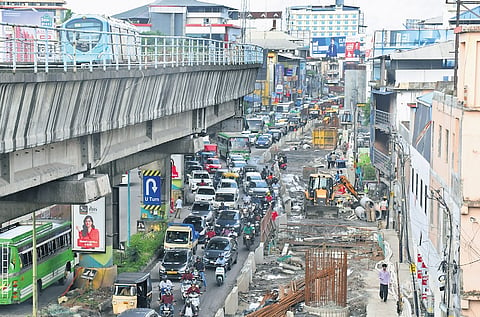

KOCHI: An increasing number of motorists in Kochi are falling victim to a fake e-challan scam, with cyber fraudsters exploiting the city’s worsening traffic congestion and ongoing metro rail construction to trick vehicle owners into paying fines for violations they never committed.
The messages typically contain a vehicle registration number and direct recipients to a payment portal that closely resembles an official government website. With traffic diversions, road works, and bottlenecks becoming a daily reality across the city, many motorists admit they often fear they may have unknowingly violated traffic rules while navigating congested roads. Investigators believe fraudsters are capitalising on this uncertainty.
“I recently lost `500 without realising the message was fake. I thought I had committed a traffic violation. Usually, we verify the details on the Parivahan website before making a payment, but I was unaware of this scam. Since the amount was small, I did not file a complaint,” said Vincent Thomas, a senior citizen from Thammanam.
Investigators said Vincent’s experience is not uncommon, with many victims choosing not to file complaints because the financial loss is often relatively small. However, they stressed that even complaints involving minor amounts can help authorities trace larger cyber fraud networks and prevent others from falling victim to similar scams.
Taxi drivers, who spend long hours on Kochi’s roads, said such messages have become increasingly common. “Some drivers lost money because the messages correctly mentioned their vehicle registration numbers. Now we are more cautious. Many drivers are receiving similar messages. These websites often ask users to make payments through links other than the official Parivahan portal, but many people fail to notice the difference,” said Satheesh, a taxi driver.

The fake notices are designed to create a sense of urgency, warning recipients that failure to pay immediately could result in additional penalties, suspension of vehicle documents, or legal action. Fearing further complications, many victims make payments without verifying the authenticity of the notice.
Senior police officials said motorists should never pay traffic fines through links received via unsolicited text messages without first confirming the violation through official government platforms.
“Even complaints involving small amounts can provide valuable leads for investigators tracking organised cyber fraud networks. Motorists should never pay a traffic fine unless the violation is verified through the official Parivahan portal. Fraudulent websites can cause losses far beyond the amount paid as a fine. In some cases, they may also gain access to sensitive information stored on a victim’s mobile phone,” a senior police officer said.
With thousands of motorists navigating traffic diversions and roadworks every day, police warned that verifying a challan before making a payment remains the simplest way to avoid becoming the next victim.