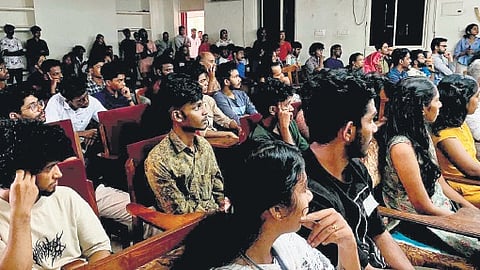

THIRUVANANTHAPURAM: A movie is still the perfect way to unwind. Multiplexes know this and welcome weekenders with expensive tickets and fancy, pricey popcorns.
However, this yearning to throng multiplexes is a recent trend. The state, in particular, its capital, had a different culture till some decades ago — of film clubs that would show good cinema.
From Chithralekha Film Society in 1965, the first in the state, the film society movement in Kerala, which continued till the ’90s, was very vibrant, producing not just minds that could appreciate good cinema but also great makers such as Adoor Gopalakrishnan and G Aravindan.
Five film enthusiasts from ISRO then formed the Chalachitra Film Society in 1976. One of the five was N Krishnamoorthy, who later shot to fame as Soorya Krishnamoorthy and set up the Soorya Stage and Film Society in 1977 to further cater to the capital’s cineastes.
Between 1975 and ’85, the peak of film movement in the state, Kerala had over 300 film societies registered with the Federation of Film Societies of India. All such societies thrived till about the mid ’90s.
Chalachitra’s membership touched over 1,000 and its seven-day Trivandrum International Film Festival was turning out to be a popular stop for film buffs until Chalachitra Academy began its International Film Festival of Kerala (IFFK), armed with government funding.
From then, the film society culture was on its wane. Taxes levied on the use of public spaces where the film screenings were held also added to the slump. However, George Mathew, former office-bearer of Chalachithra, feels that it was the advent of TV that wrought this on.
It was then the Film Lovers Cultural Association (FILCA) was formed under the leadership of founder director of National Film Archive of India P K Nair. He and a group of enthusiasts tried pooling in the film fervour of serious enthusiasts again and took it forward by organising monthly festivals.
“The IFFK’s festival was a yearly one and there was no opportunity for serious film lovers to update themselves on good cinema,” says FILCA general secretary Sabu Shankar.
But even this effort was short lived, as by 2022, the FILCA also decided to wind up. Its monthly film festivals gave way to monthly screening of a film. Other societies also paled.
“It was then FILCA decided to build on the basics with a new team. We organised the technical aspects, curated films to be shown monthly, put together a website, and got a digital magazine going. We then revived the regular screenings in collaboration with other societies such as Chalachitra, BEAM, SPARC, CET Film Society, and Soorya, which were also facing tough times,” says Sabu Shankar.
Since its refurbishment in 2022, FILCA and other societies have been organising theme-based and masters-based film festivals every month.
“It was usually held in the State Central Library on Sundays but since Covid, the Sunday timings at the library is restricted. So we had to shift it to Bharat Bhavan. We have officially requested for the library timings to be brought back to pre-Covid times,” say FILCA officials. The next festival is on March 17. Four films of Spanish master Alejandro Jodorowsky will be screened at BSS Hall.
FILCA will also be documenting its festival-based discussions in a series of films to be soon shown on KSFDC’s OTT platform, C-Space.
For those who have been part of the film lovers’ clubs of the ’70s and ’80s, the future holds no light for film societies. Many feel their time is up because “why should anyone be a part of a film society when they can watch any movie they want from the comfort of home.”
But film societies are not for merely watching films.
“They inculcate a culture of appreciation and our effort is to try and get people to enjoy and discuss good movies. We are planning to collaborate with educational institutions and handhold the cinema clubs there. A proposal has also been made to organise a 11-month appreciation course in schools and colleges, where there will be monthly screening of a movie and discussions on it thereafter,” says Sabu Shankar.
