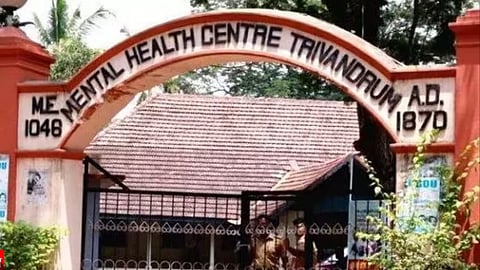

THIRUVANANTHAPURAM: As the state brimmed with activity on April 9 with people flocking to vote in what was touted as a ‘close call election’, a space in the capital city moved as per its usual, slow pace. Here, at the Peroorkada Mental Health Centre, voting is a process that happens outside the 26 acres it bounds. Leave aside voting, no political parties even came to the premises seeking votes.
“There are about 450 inmates admitted there, and time and again, there have been moves to voice for their right to vote. At least half of them are mentally fit, but they do not have a home to return to, being victims of social stigma,” claims a doctor who does not wish to be named.
The general perception that the inmates are mentally unsound puts a question mark on their ability to make informed decisions. “This perception is debatable and needs to be investigated,” he further claims.
The question about voting rights for persons with mental illness had come up in the Kerala High Court, and the court ruled that inmates of mental health care centres can vote. The court also stated that they cannot be disqualified unless a competent court declares them unsound.
This goes in tandem with Section 16 of the Representation of the People Act that deals with ‘Disqualification for Registration in electoral roll’, as per which a person can be disqualified as a voter if he/she is of unsound mind but that incapacity has to be declared by a competent court.
Legal experts like human rights lawyer Sandhya Janardhanan feel that even within the existing provisions, no effort has been made to either evaluate the ‘soundness’ of the voters’ mind or make provisions for those who are fit among the inmates. “Social stigma does not let them go back to their homes and be like normal citizens even if they come under the purview of ‘mentally sound to vote’. This brings forth certain location-specific hiccups. Hence a special effort has to be made for them to exercise their right to franchise in the place where they are housed,” she says.
Such a ‘special effort’ was made by Santosh S, founder of Santhimandiram, a facility that houses mental health patients rehabilitated after discharge from hospitals as well as those rescued from public spaces. Santosh went through a long-drawn process to procure Aadhaar and voter’s ID for 36 of around 100 inmates of Santhimandiram. “All of them voted on April 9 at a booth at our rehabilitation centre. We got identity cards made for them under our address after an endorsement from my side,” he notes, adding his effort got no support from the authorities.
Sandhya Raju, director of Centre for Constitutional Rights, Research, and Advocacy, feels constitutional rights such as that of voting cannot be denied “just because a person is confined to a health care institution” when the law clearly calls grant of citizen rights.
